
PUZZLES
Course Puzzles
Printable puzzles connected to FND Education Project course pages and terminology.
Choose a collection, module and lesson. These optional activities offer a lighter way to revisit the course.
Crosswords · Colouring pages · Course
Jump to a crossword: Lesson 15 · Lesson 16 · Lesson 17 · Module 4 review · Module 5 review · Module 6 review · Lesson 12 · Lesson 13 · Lesson 14 · Lesson 1 · Lesson 2 · Lesson 3 · Lesson 4 · Lesson 5 · Lesson 6 · Lesson 7 · Lesson 8 · Lesson 9 · Lesson 10 · Lesson 11 · Module 1 review · Module 2 review · Module 3 review · Lesson 18 · Lesson 19 · Lesson 20 · Lesson 21 · Lesson 22 · Lesson 23 · Module 7 review · Lesson 24 · Lesson 25 · Lesson 26 · Module 8 review · Lesson 27 · Lesson 28 · Lesson 29 · Module 9 review
Crosswords
Choose a preview to open the PDF in a new tab or window. Normal and easy editions can be filled in using a compatible PDF reader or printed. The easy edition includes a word bank.
Lesson 1: Functional What?
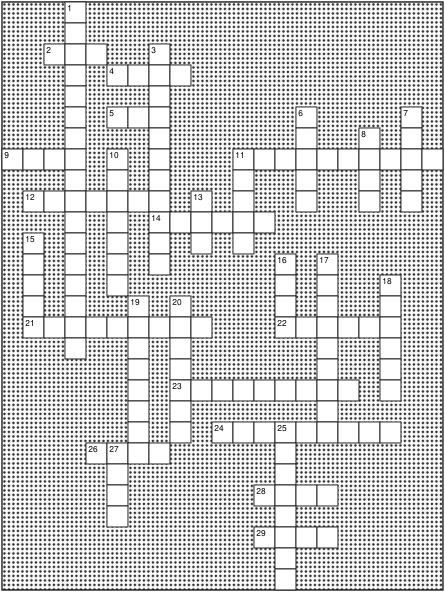
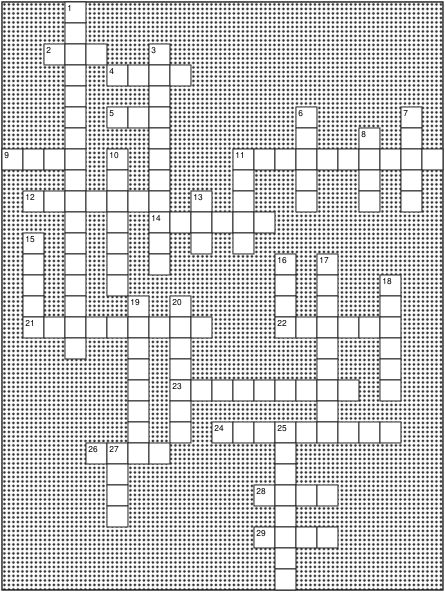
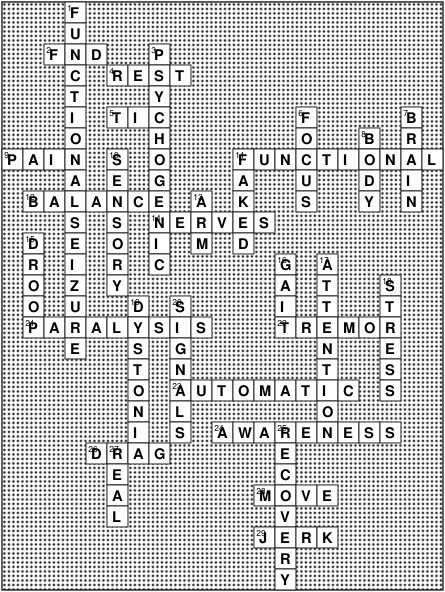
Lesson 2: Biopsychosocial mess
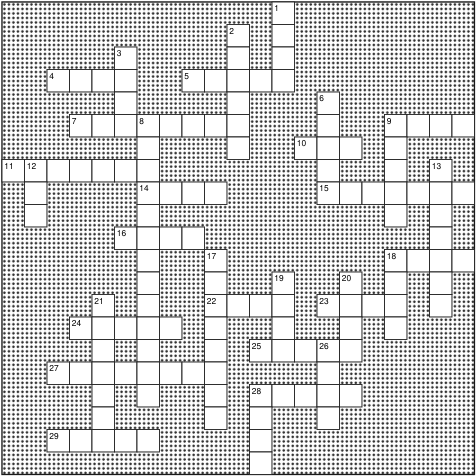 Biopsychosocial mess — Normal PDF
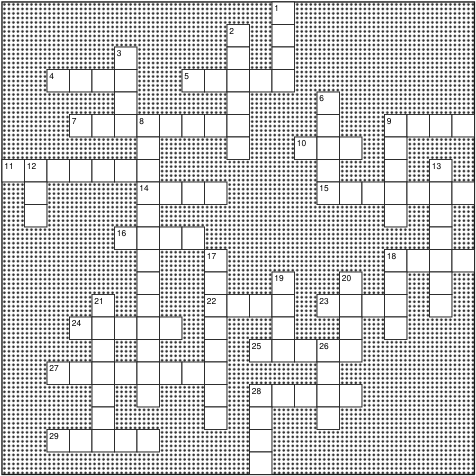 Biopsychosocial mess — Easy PDF
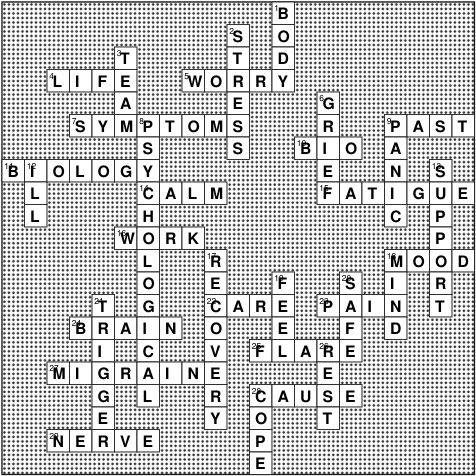 Biopsychosocial mess — Answer key PDF
Lesson 3: Remission and Recovery
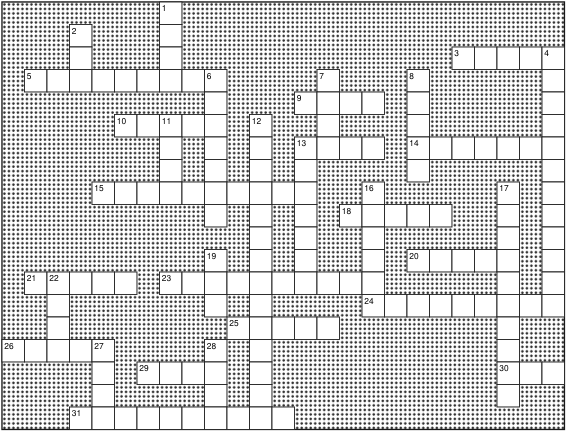 Remission and Recovery — Normal PDF
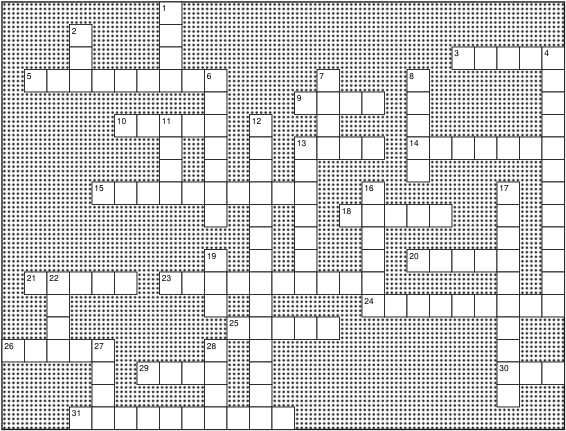 Remission and Recovery — Easy PDF
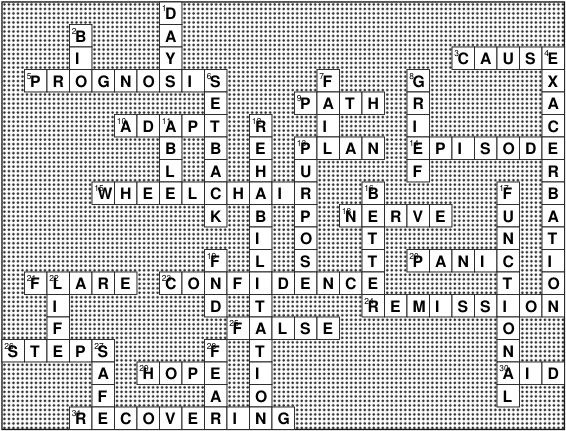 Remission and Recovery — Answer key PDF
Lesson 4: Available Capacity and Spoons
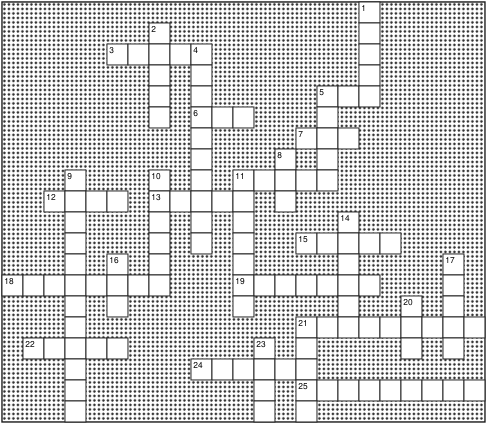 Available Capacity and Spoons — Normal PDF
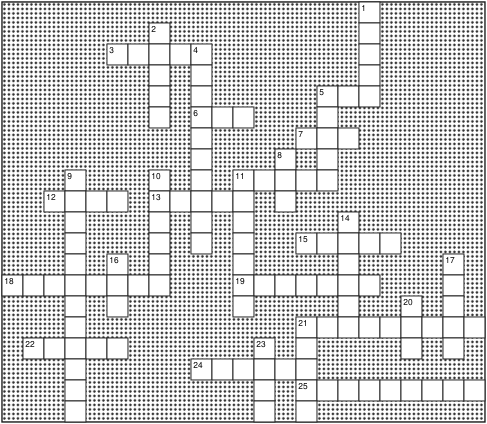 Available Capacity and Spoons — Easy PDF
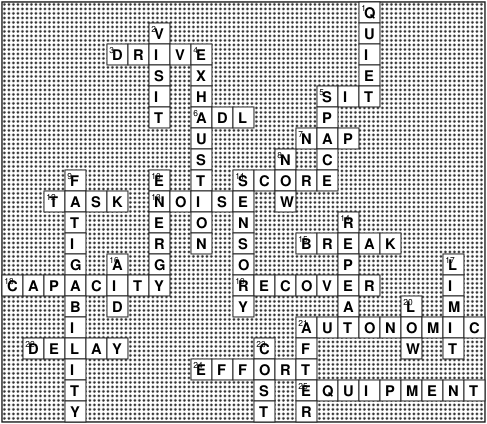 Available Capacity and Spoons — Answer key PDF
Lesson 5: Positive Signs and the Neuro Exam
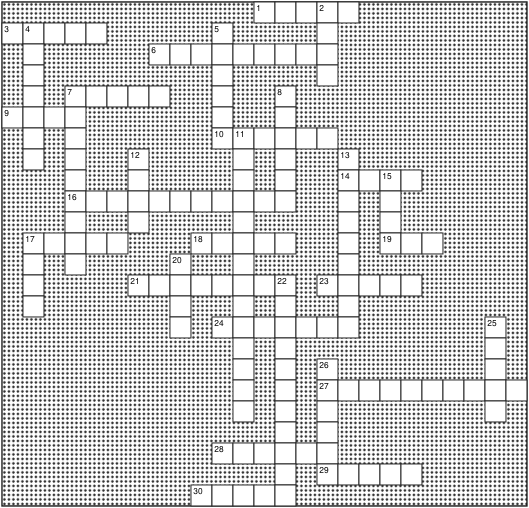 Positive Signs and the Neuro Exam — Normal PDF
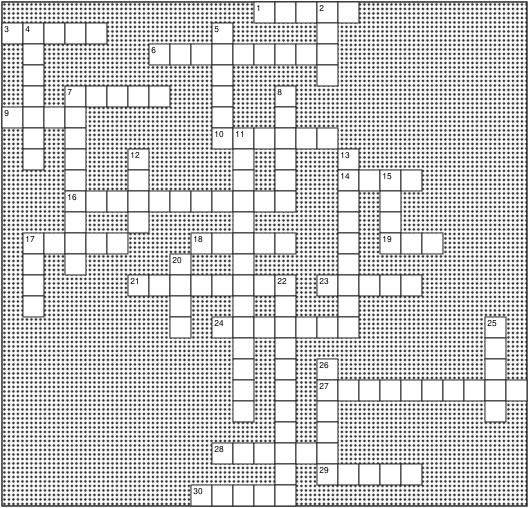 Positive Signs and the Neuro Exam — Easy PDF
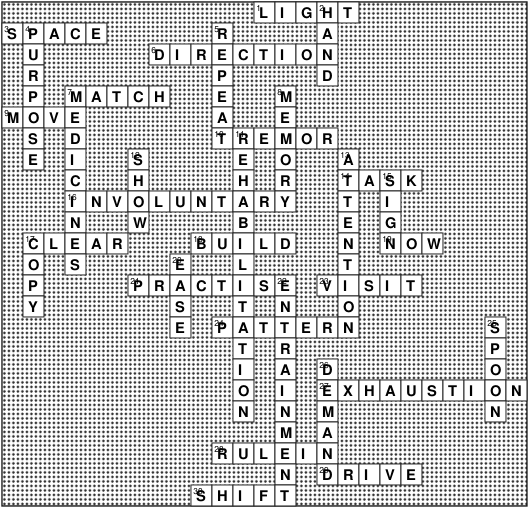 Positive Signs and the Neuro Exam — Answer key PDF
Lesson 6: Tests, Uncertainty, and CoExisting Conditions
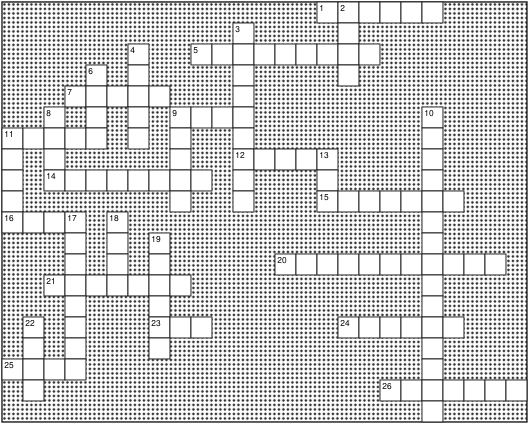 Tests, Uncertainty, and CoExisting Conditions — Normal PDF
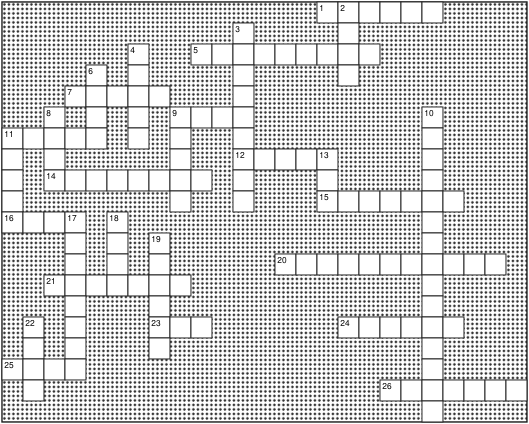 Tests, Uncertainty, and CoExisting Conditions — Easy PDF
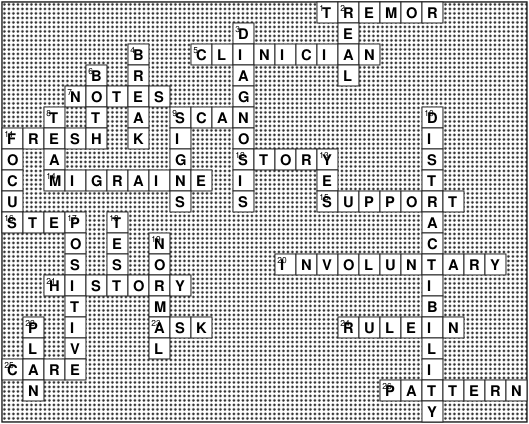 Tests, Uncertainty, and CoExisting Conditions — Answer key PDF
Lesson 7: Causes, Risk Factors and Triggers
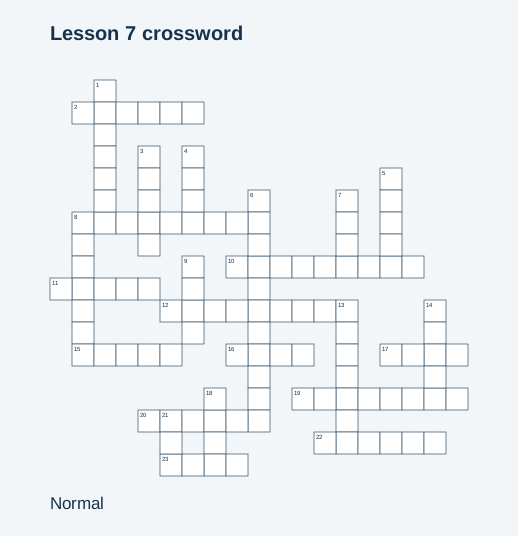 Causes, Risk Factors and Triggers — Normal PDF
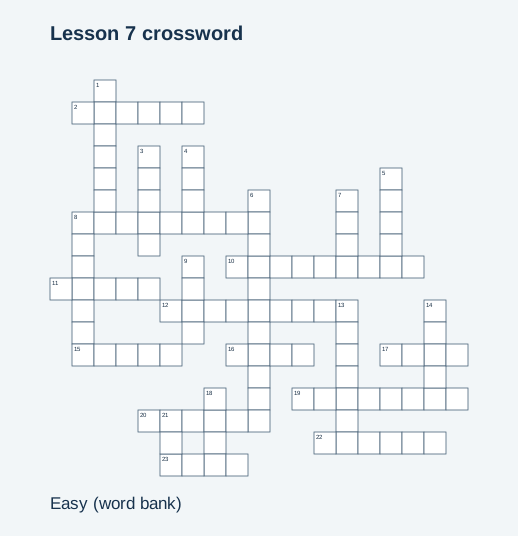 Causes, Risk Factors and Triggers — Easy PDF
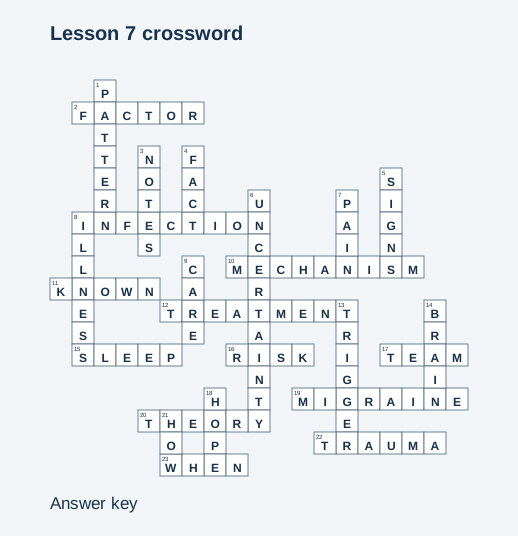 Causes, Risk Factors and Triggers — Answer key PDF
Lesson 8: Brain Networks, Prediction, Attention, and Agency
 Brain Networks, Prediction, Attention, and Agency — Normal PDF
 Brain Networks, Prediction, Attention, and Agency — Easy PDF
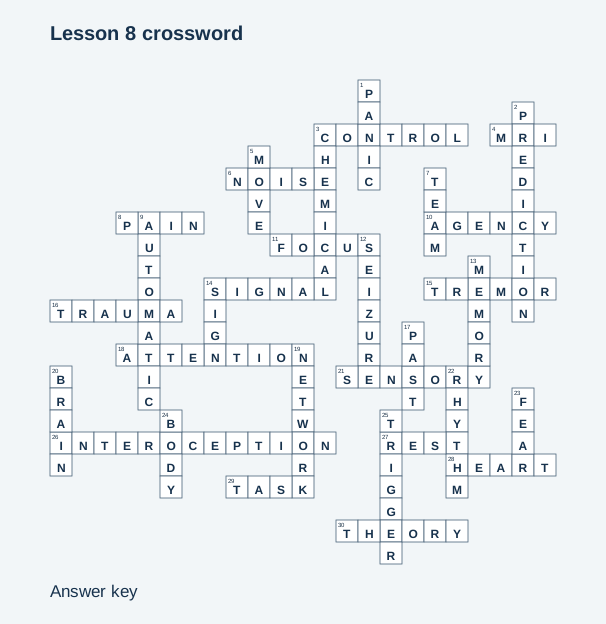 Brain Networks, Prediction, Attention, and Agency — Answer key PDF
Module 1 review crossword
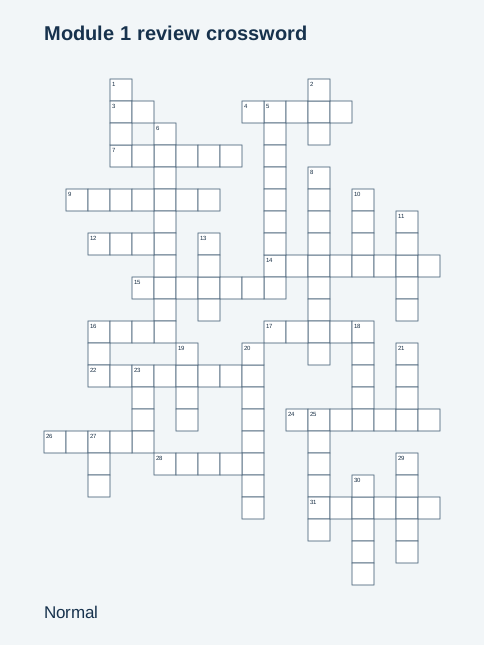 Module 1 review — Normal PDF
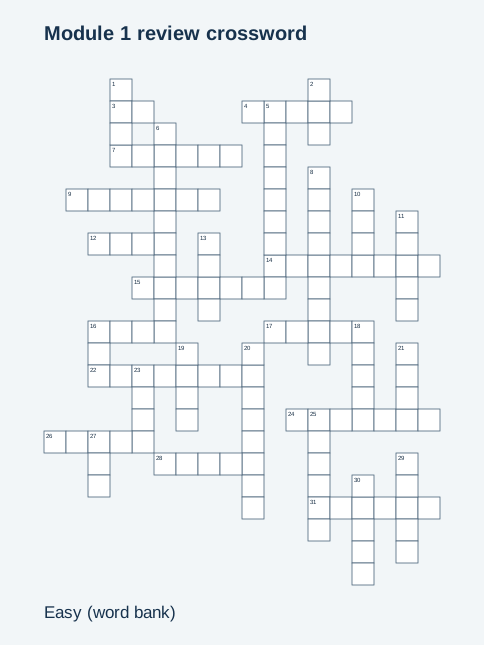 Module 1 review — Easy with word bank PDF
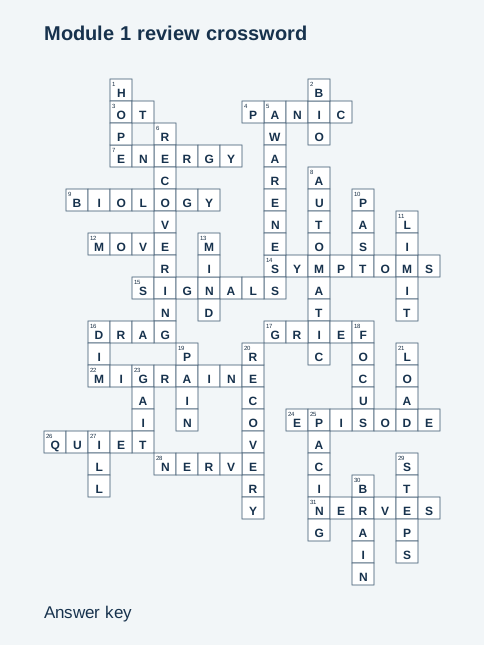 Module 1 review — Answer key PDF
Module 2 review crossword
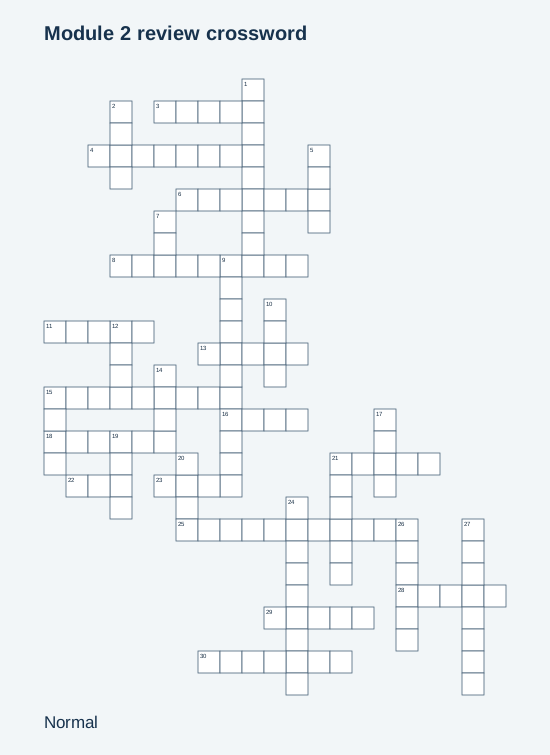 Module 2 review — Normal PDF
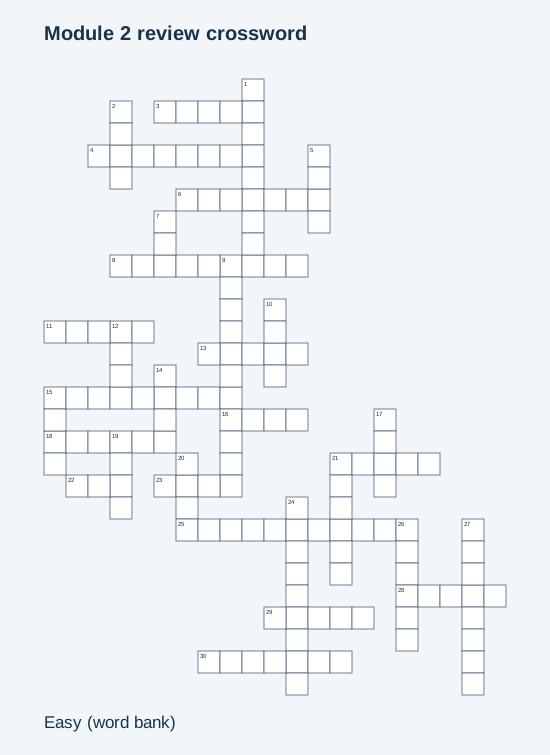 Module 2 review — Easy with word bank PDF
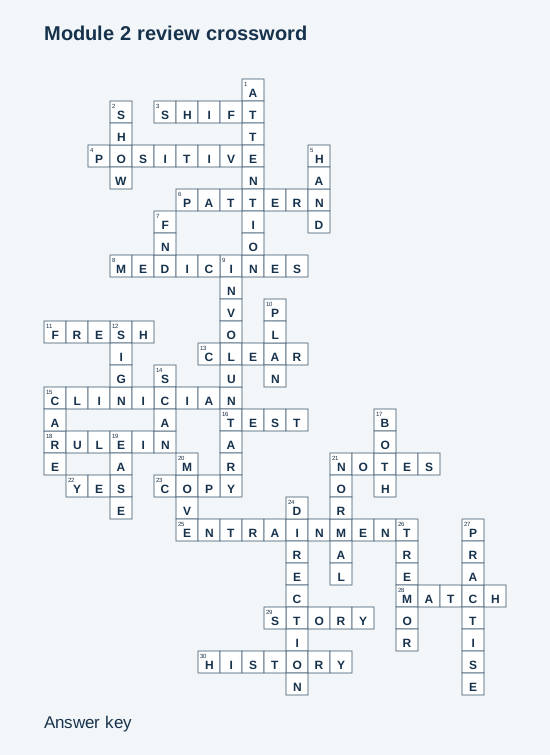 Module 2 review — Answer key PDF
Lesson 9: Physical, Psychological, and Social Factors
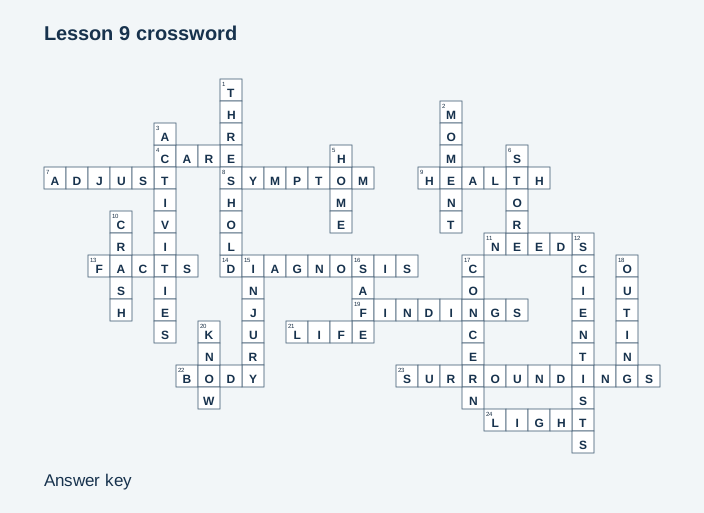
Module 3 review crossword
 Module 3 review — Normal PDF
 Module 3 review — Easy with word bank PDF
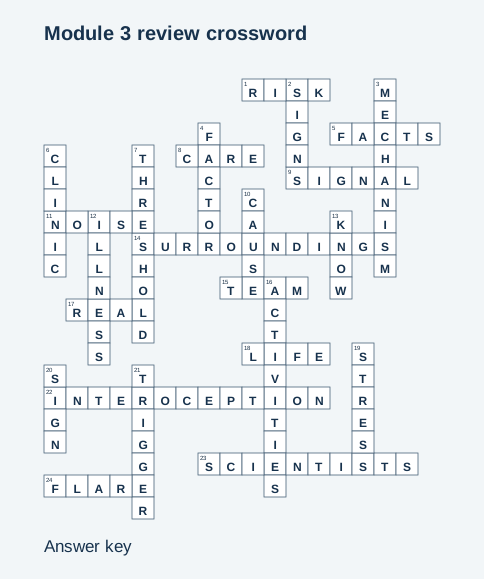 Module 3 review — Answer key PDF
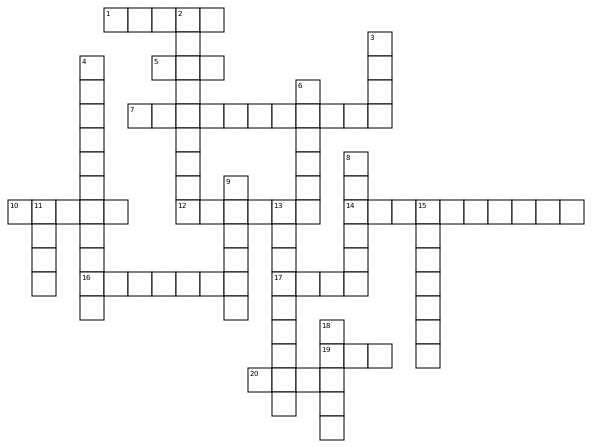
Lesson 10: Making Sense of Your Symptoms
Revisit the lesson with a crossword. The easy edition includes a word bank.
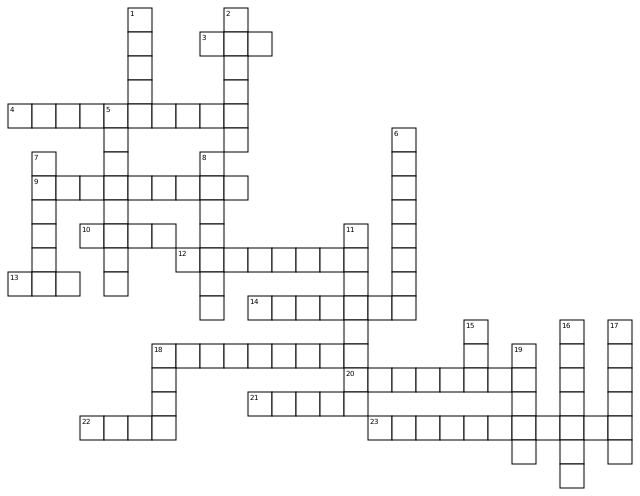
Lesson 11: Building and Using Your Symptom Map
Revisit the lesson with a crossword. The easy edition includes a word bank.
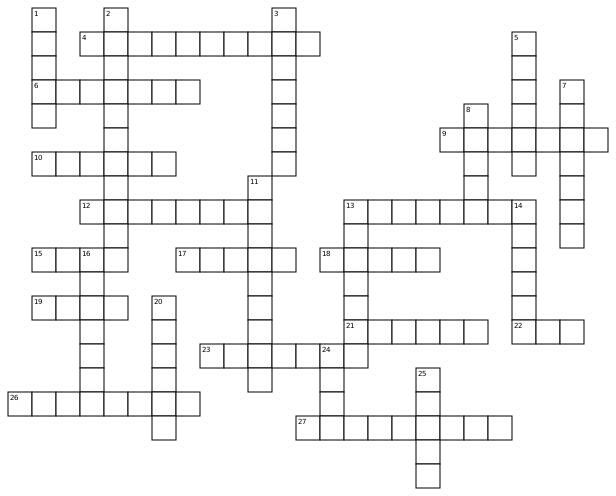
Lesson 12: Familiar Symptoms, New Symptoms, and Medical Change
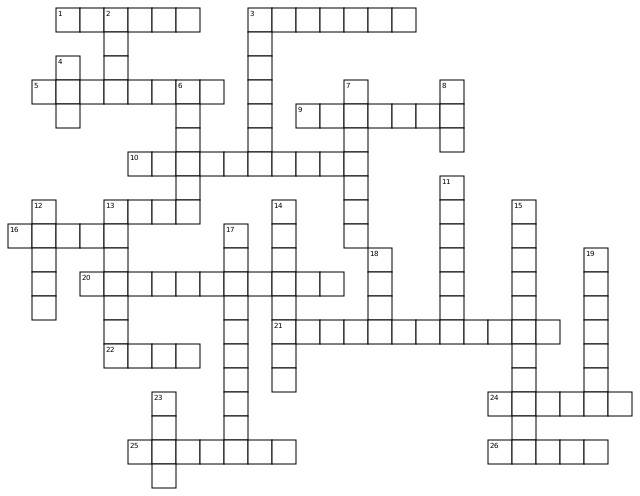
Lesson 13: Emergency Information and Individual Safety Plans
Lesson 14: Using Your Safety Plan and Deciding When to Get Urgent Help
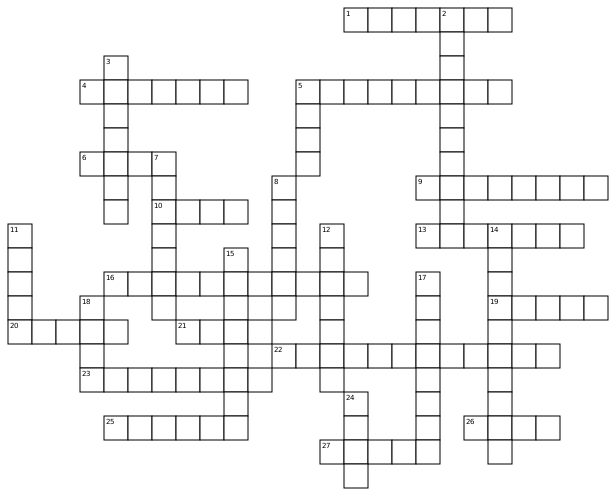
Attention: What the Brain Notices
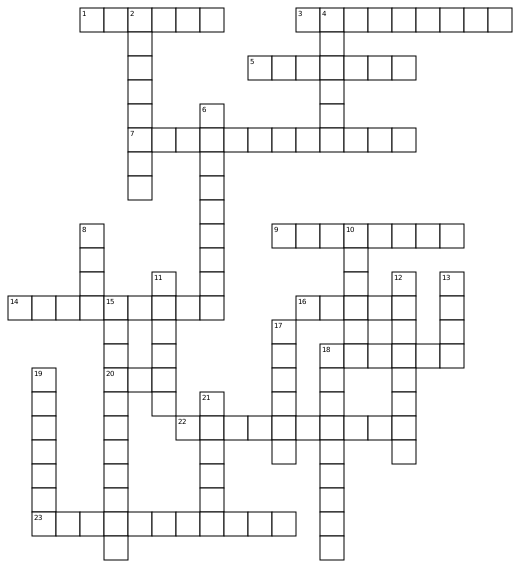
Automatic Control and Conscious Effort
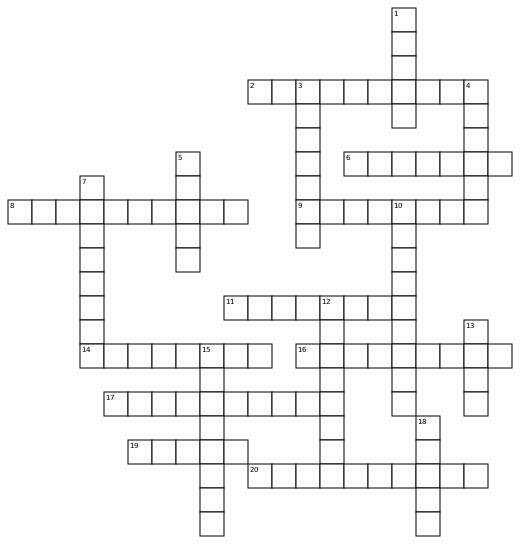
Distraction, External Focus, and Context
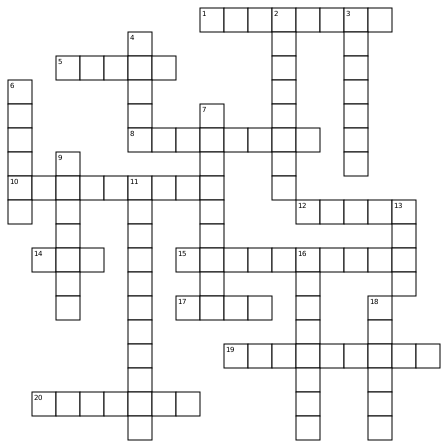
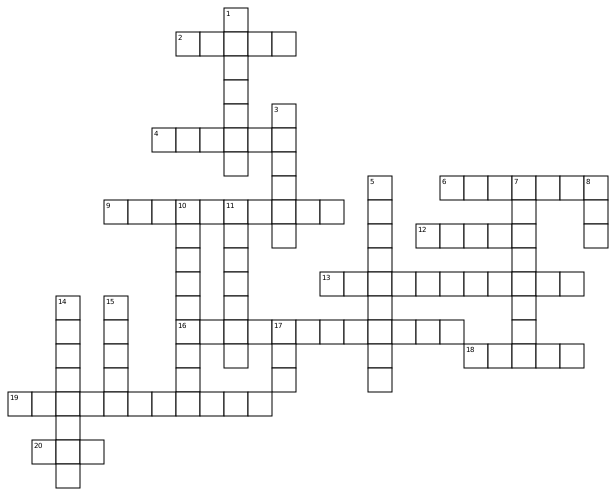
FND Education — Module 4 Review
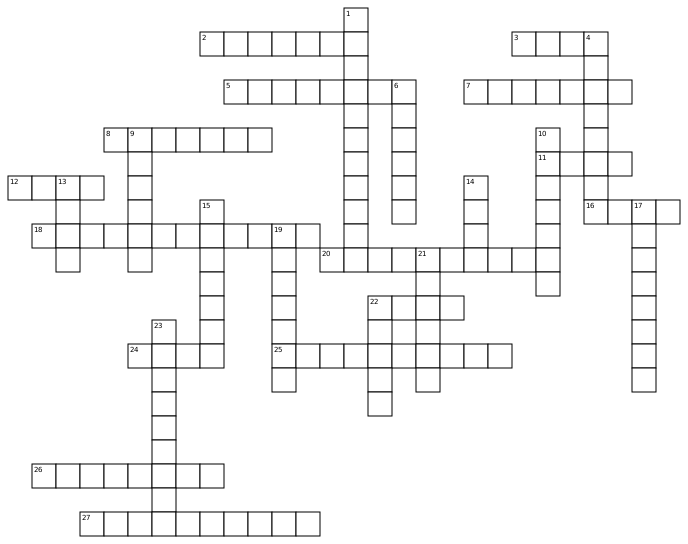
FND Education — Module 5 Review
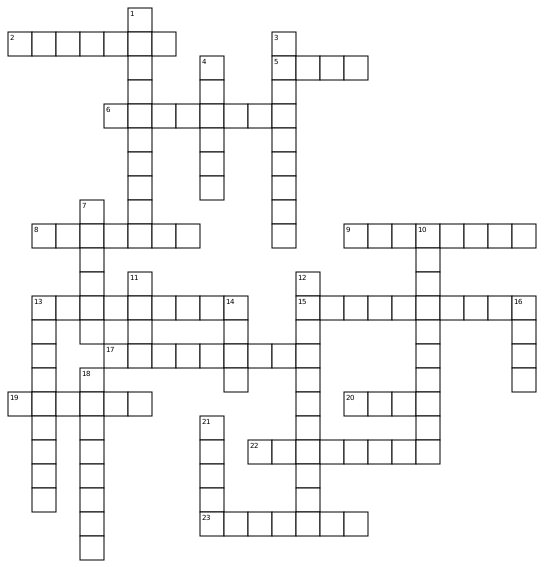
FND Education — Module 6 Review
The Predictive Brain
Interoception, Proprioception, and Outside Senses
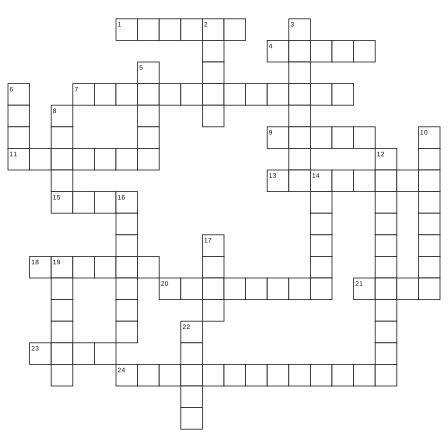
Salience, Arousal, and Feedback Loops
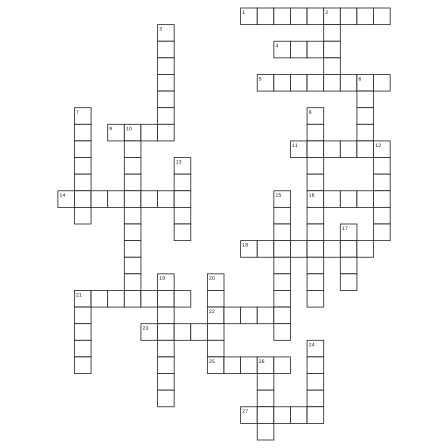
Cognitive Difficulties in FND

Emotional Regulation and Involuntary Symptoms
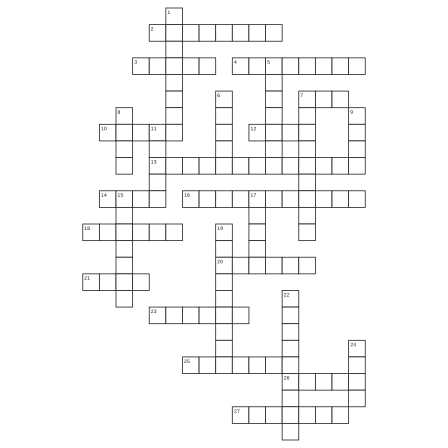
Agency, Learning, and Your Own Adaptations

FND Education — Module 7 Review

When Better Doesn’t Mean Symptom-Free
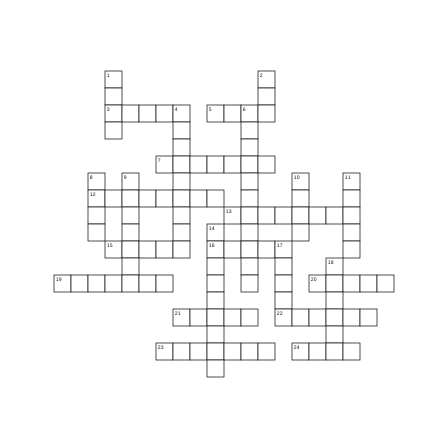
When the Familiar Explanation Doesn’t Quite Fit
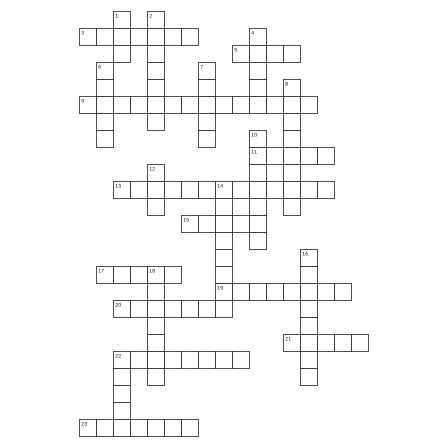
Finding Your Way Through the Reference Library
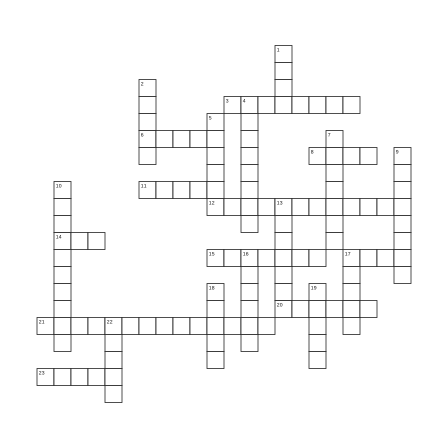
FND Education — Module 8 Review
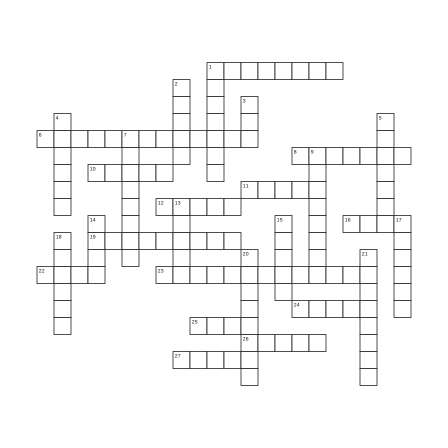
How Rehabilitation Uses Learning

Choosing Practice That Fits Your Life

When Someone Promises to Rewire Your Brain
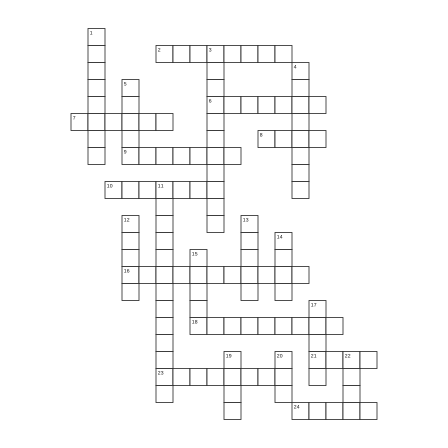
FND Education — Module 9 Review

Colouring pages
Choose a preview to open the printable PDF. Select landscape orientation and fit to page when printing.
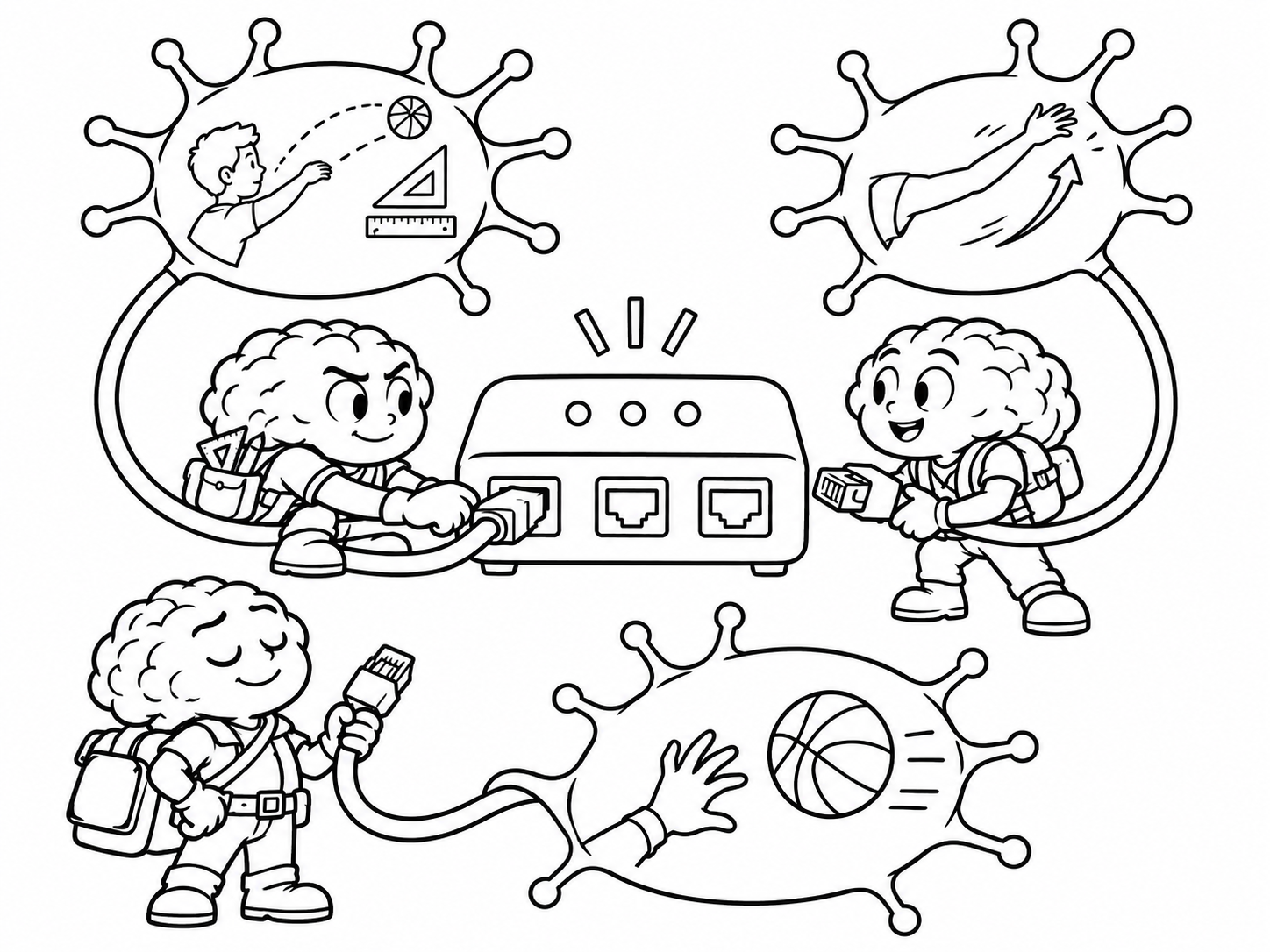 Lesson 27: How Rehabilitation Uses Learning PDF
 Lesson 28: Choosing Practice That Fits Your Life PDF
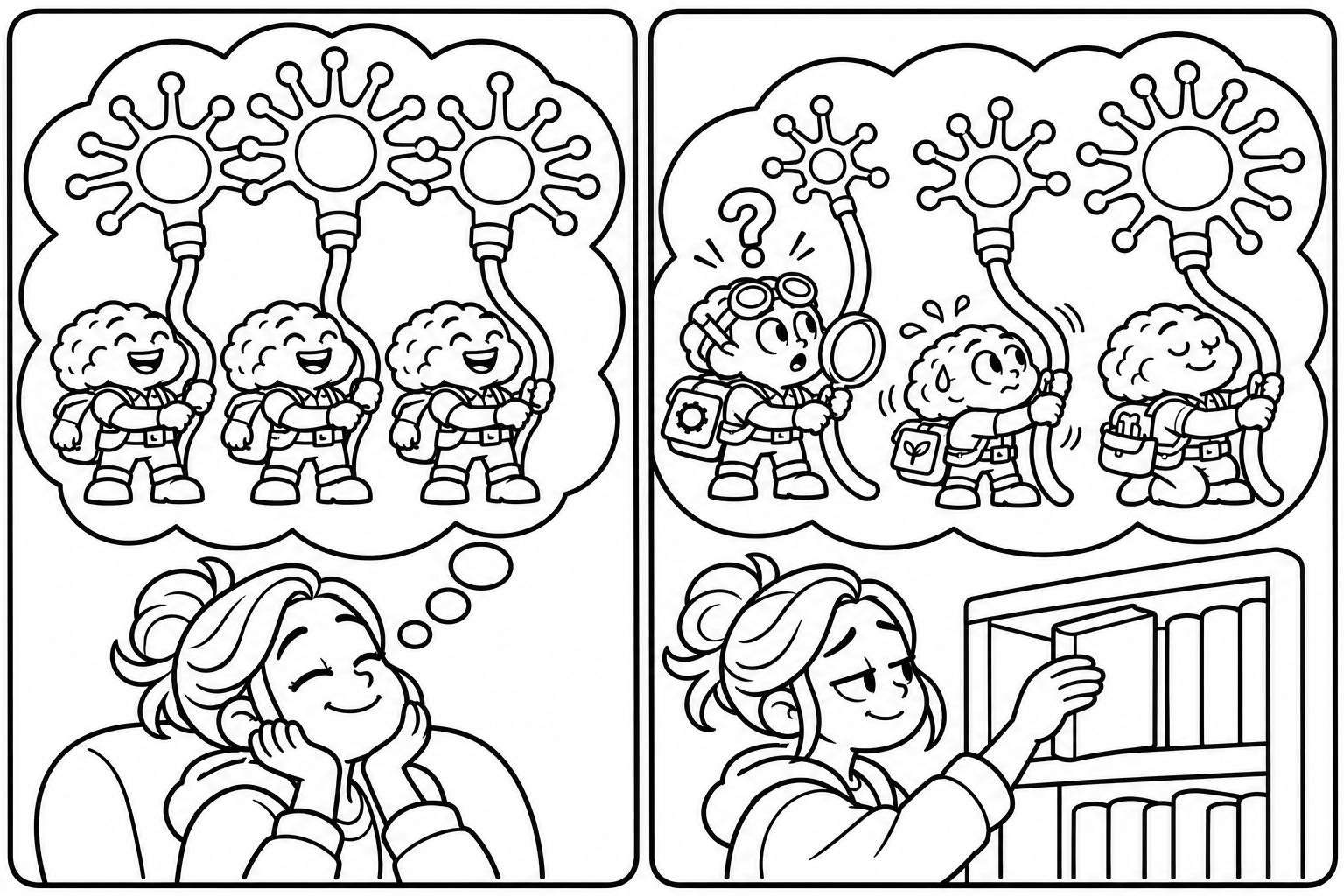 Lesson 29: When Someone Promises to Rewire Your Brain PDF
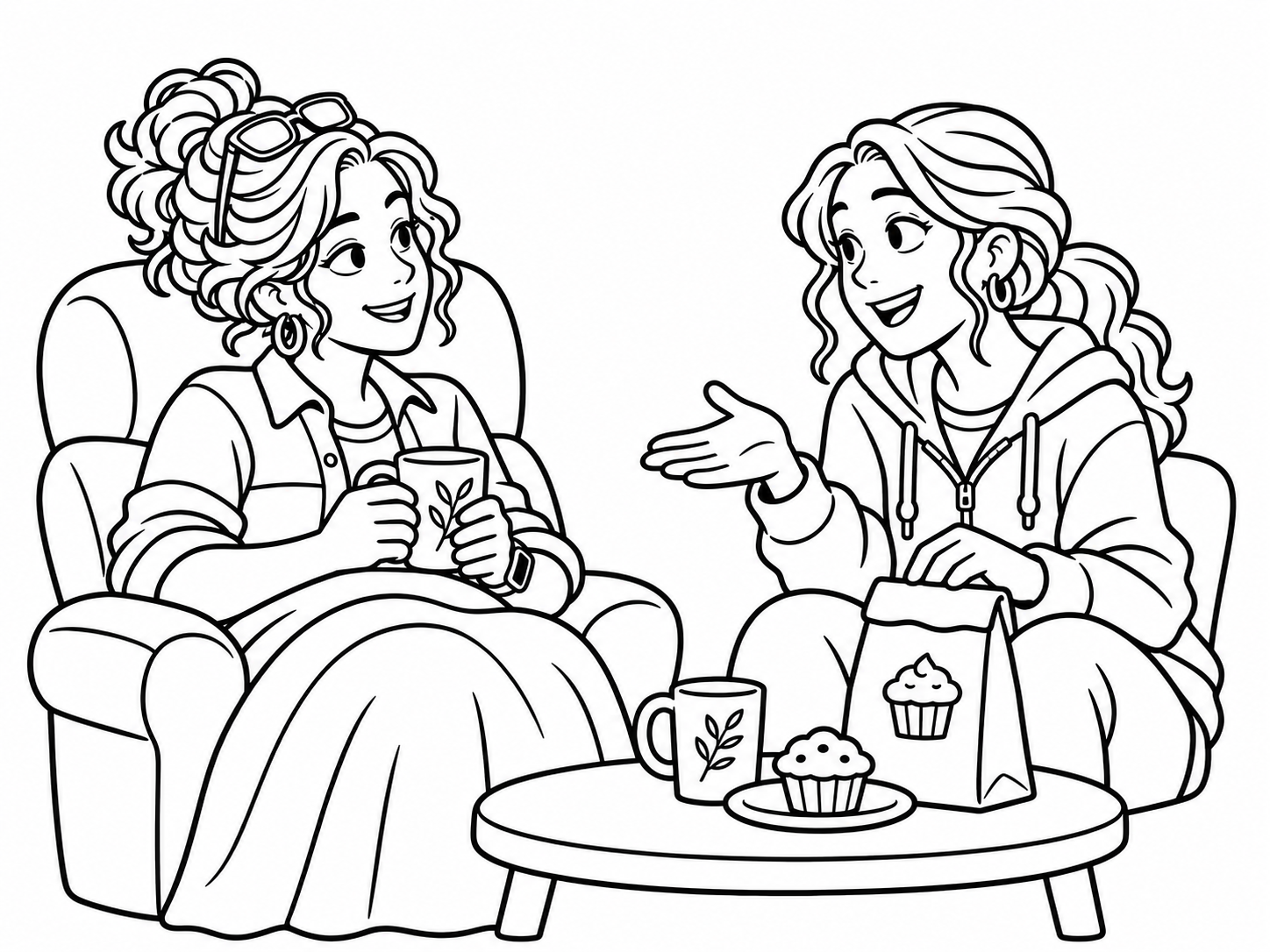 Lesson 24: When Better Doesn't Mean Symptom-Free PDF
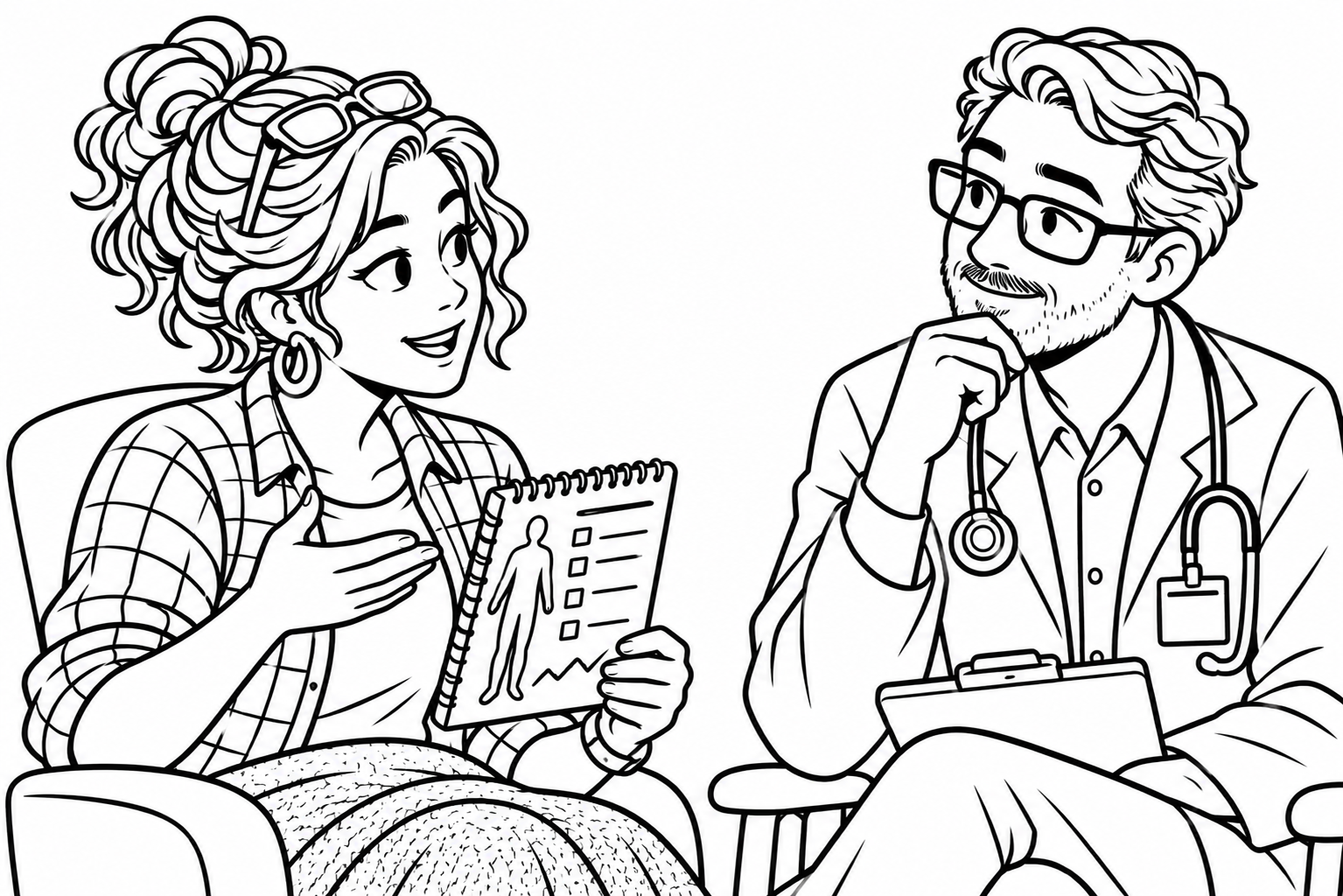 Lesson 25: When the Familiar Explanation Doesn't Quite Fit PDF
 Lesson 26: Finding Your Way Through the Reference Library PDF
 Lesson 18: The Predictive Brain PDF
 Lesson 19: Interoception, Proprioception, and Outside Senses PDF
 Lesson 20: Salience, Arousal, and Feedback Loops PDF
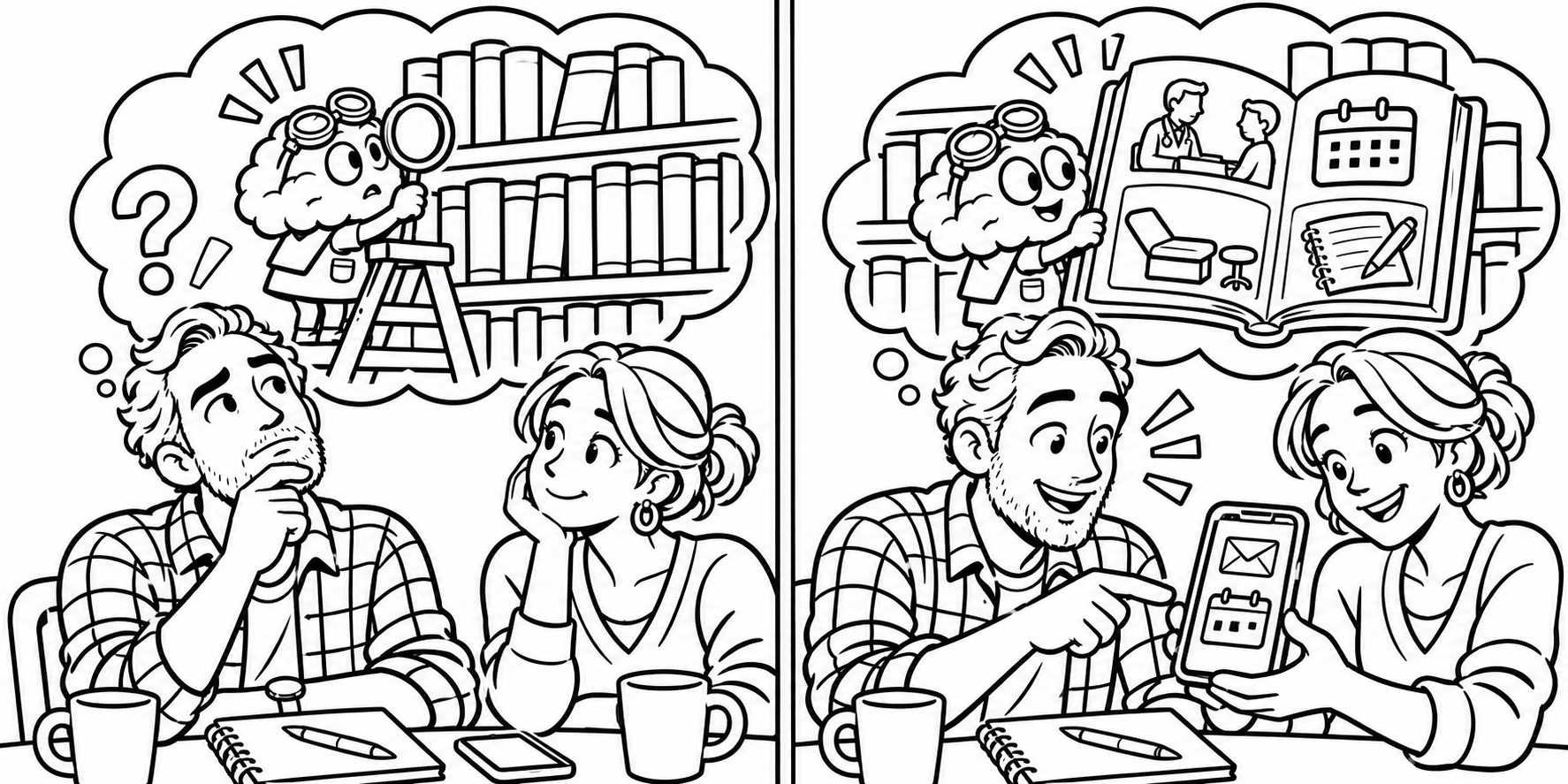 Lesson 21: Cognitive Difficulties in FND PDF
 Lesson 22: Emotional Regulation and Involuntary Symptoms PDF
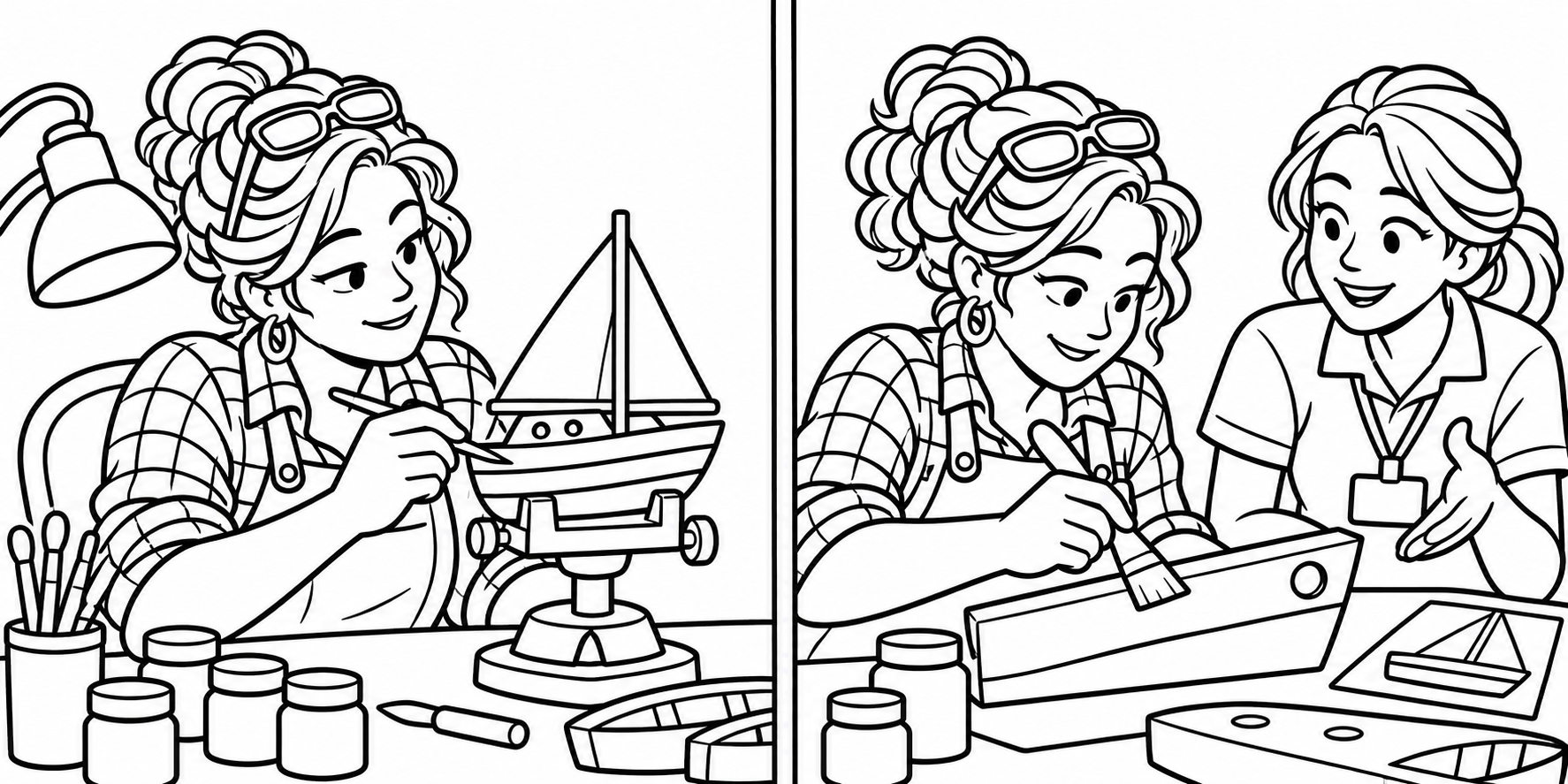 Lesson 23: Agency, Learning, and Your Own Adaptations PDF
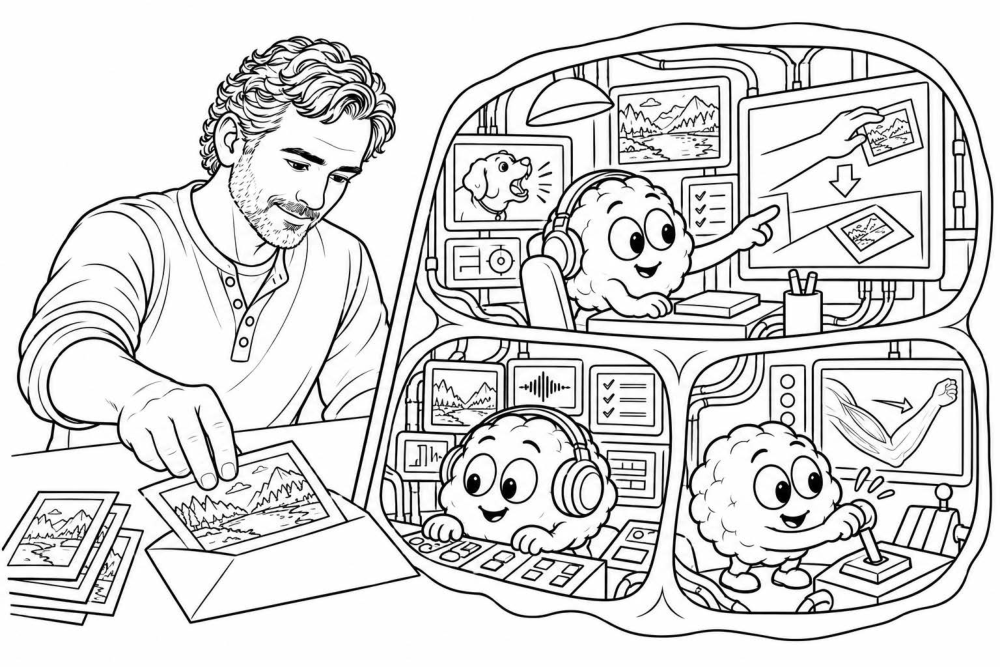 Lesson 15: Attention: What the Brain Notices PDF
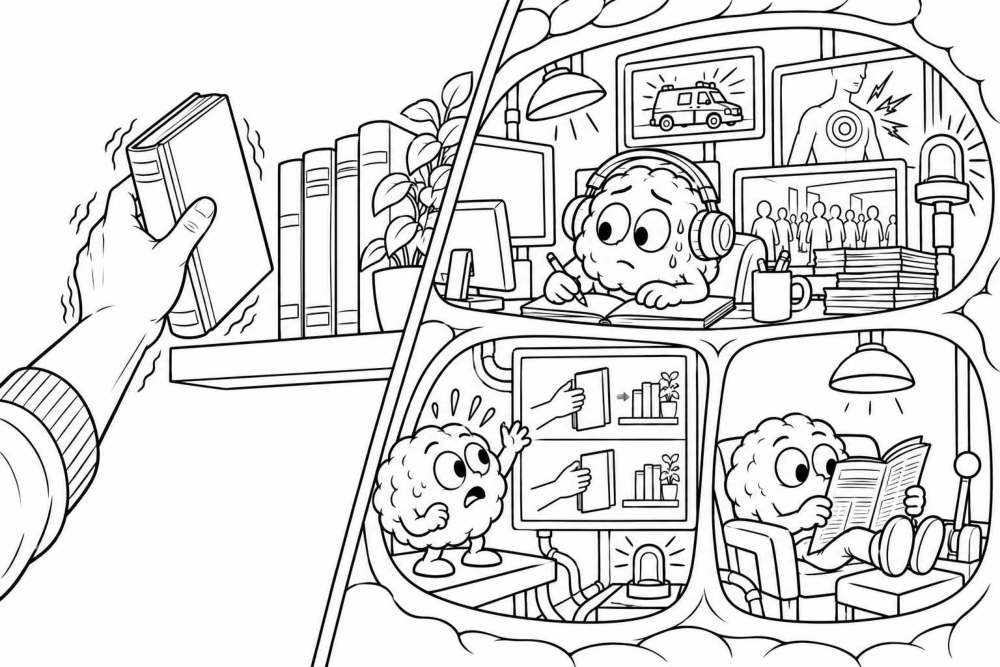 Lesson 16: Automatic Control and Conscious Effort PDF
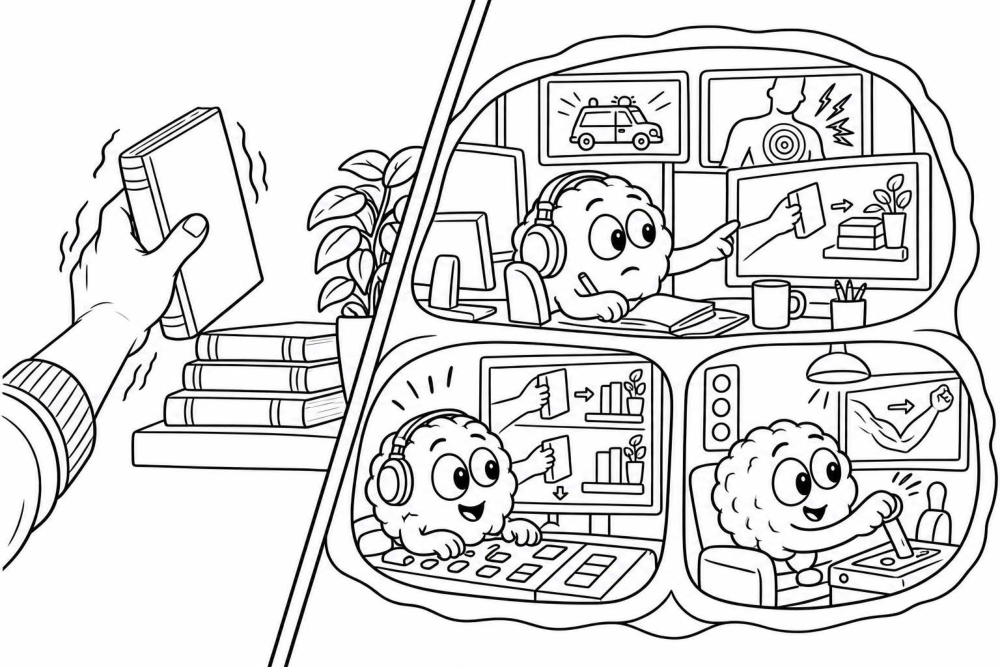 Lesson 17: Distraction, External Focus, and Context PDF
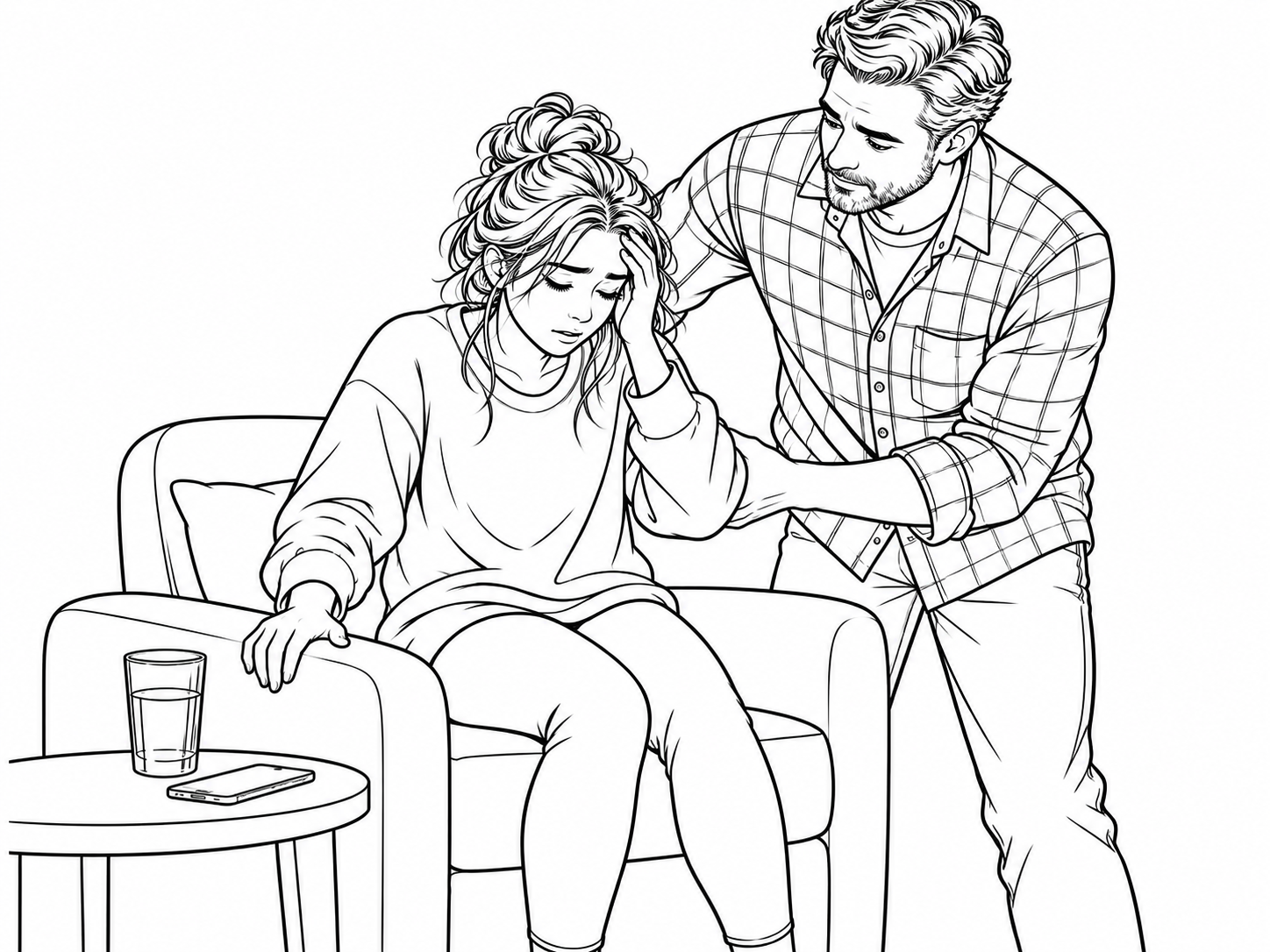 Lesson 12: Familiar Symptoms, New Symptoms, and Medical Change PDF
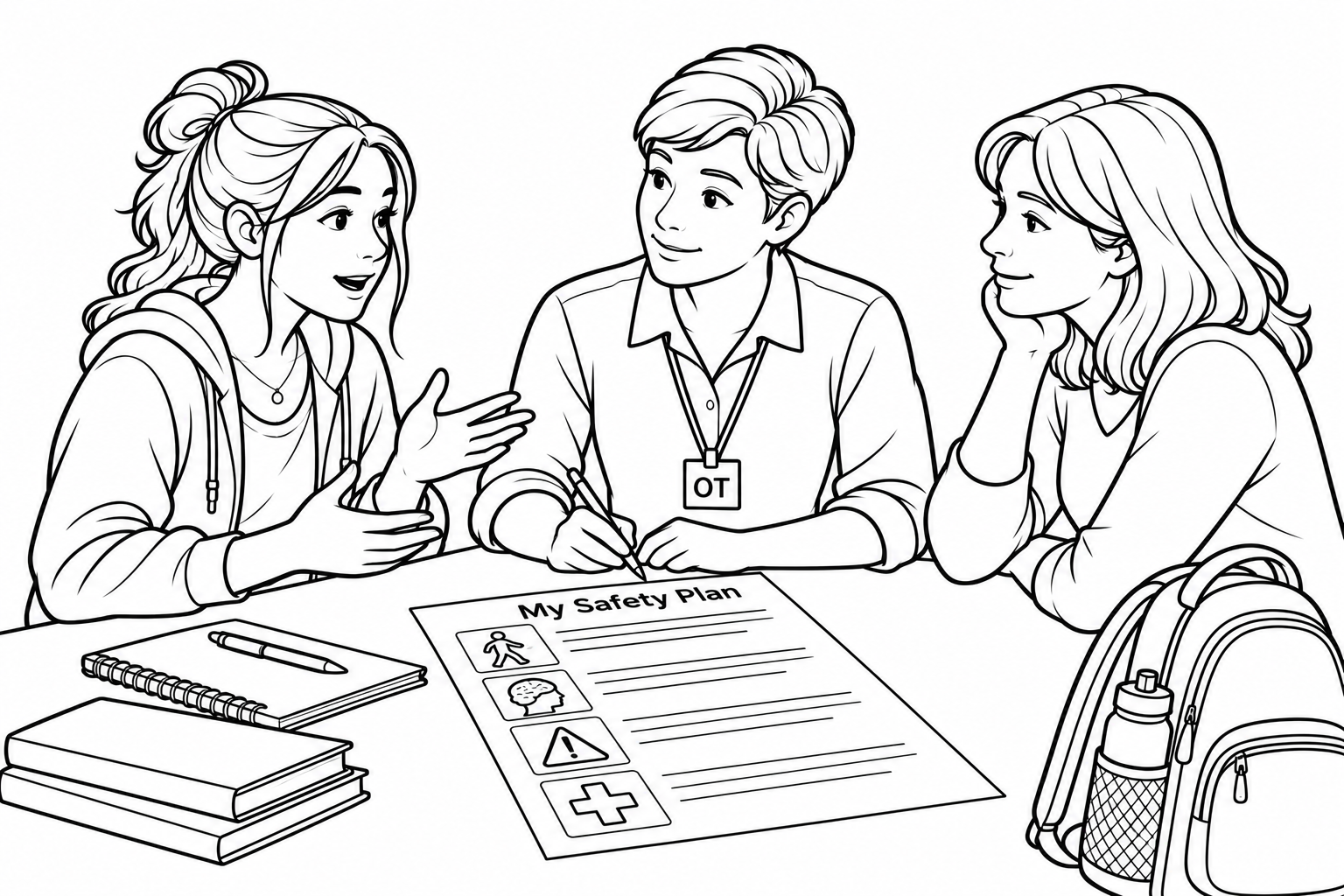 Lesson 13: Emergency Information and Individual Safety Plans PDF
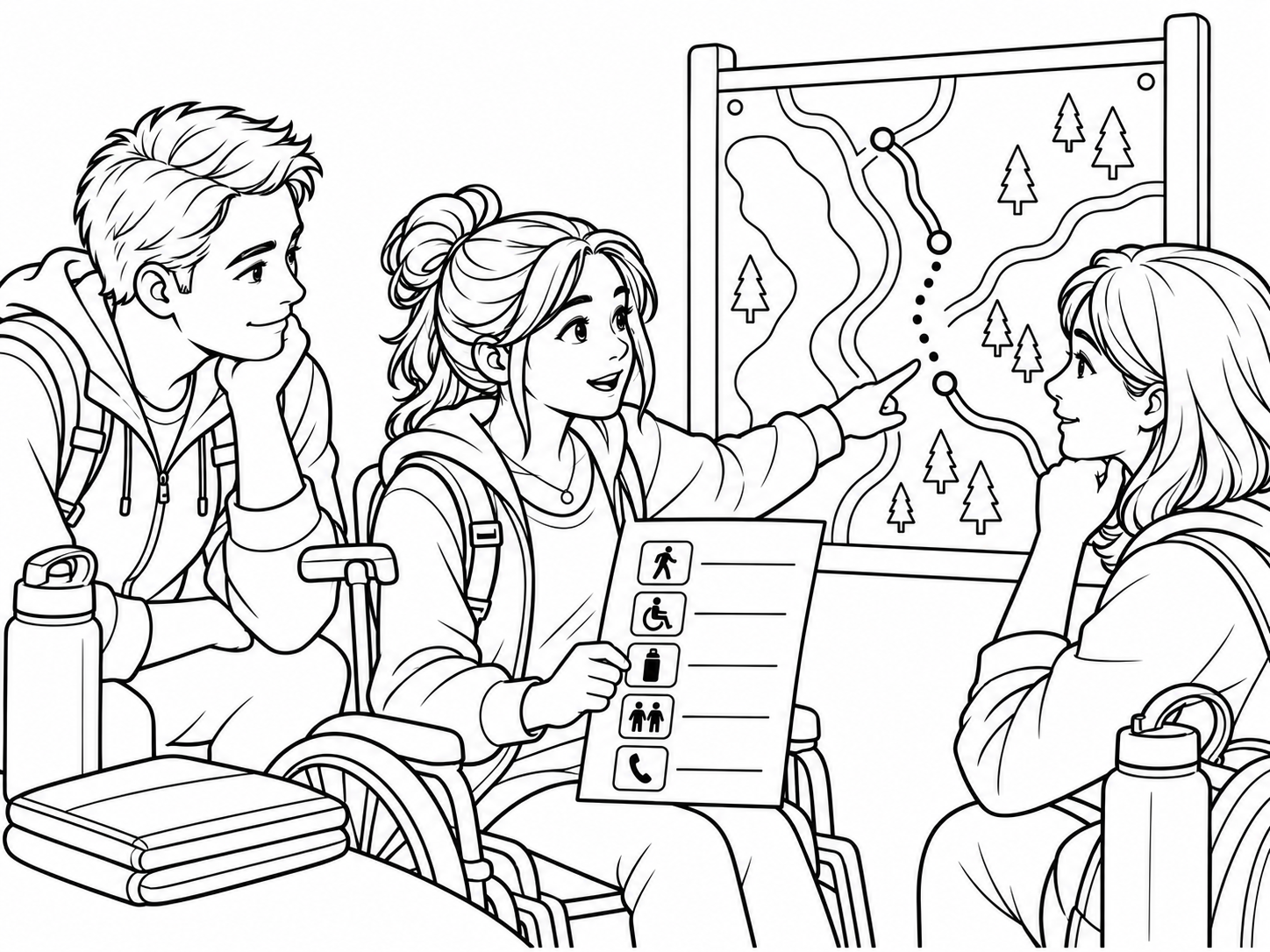 Lesson 14: Using Your Safety Plan and Deciding When to Get Urgent Help PDF
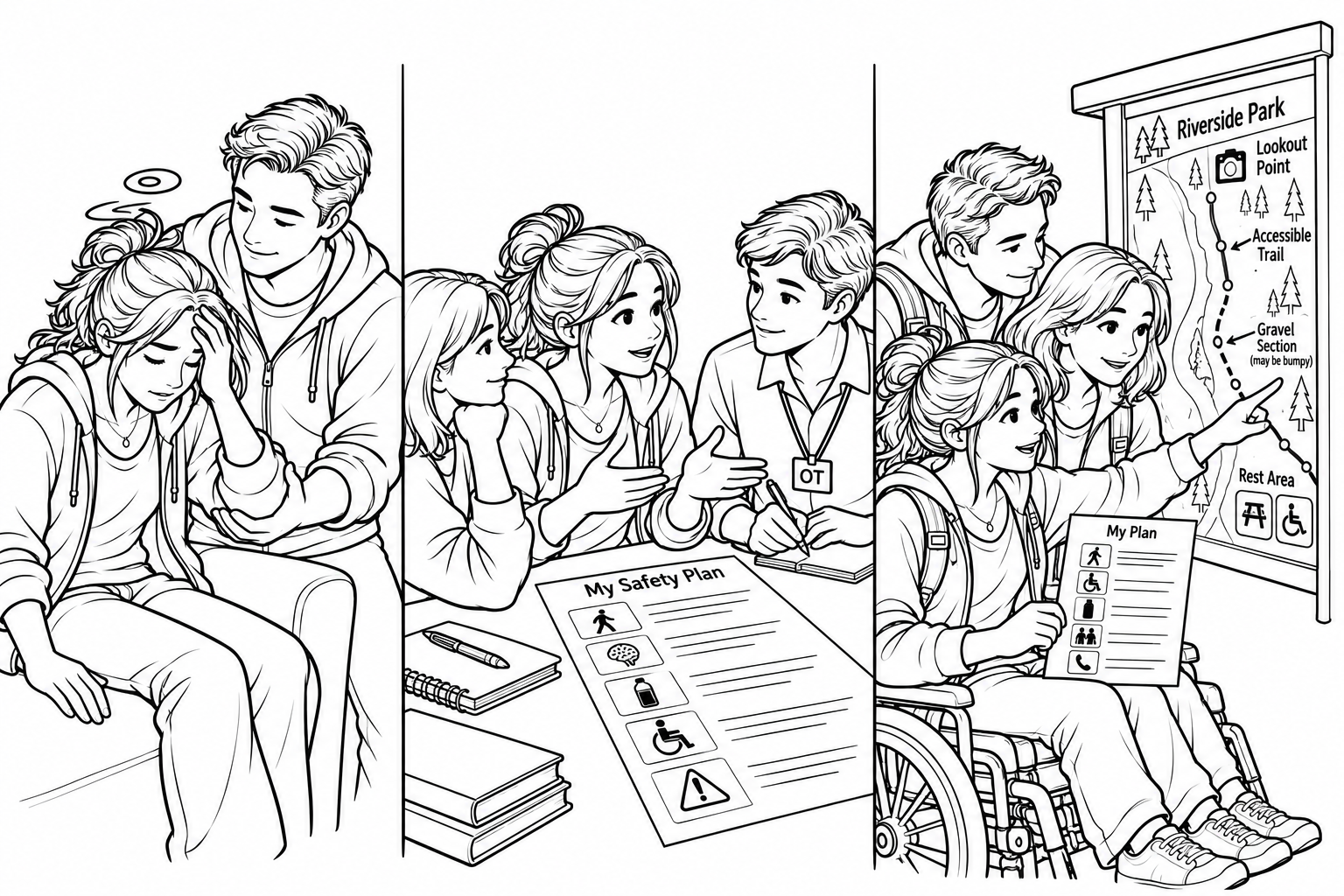 Lesson 14: Using Your Safety Plan and Deciding When to Get Urgent Help — Module recap PDF
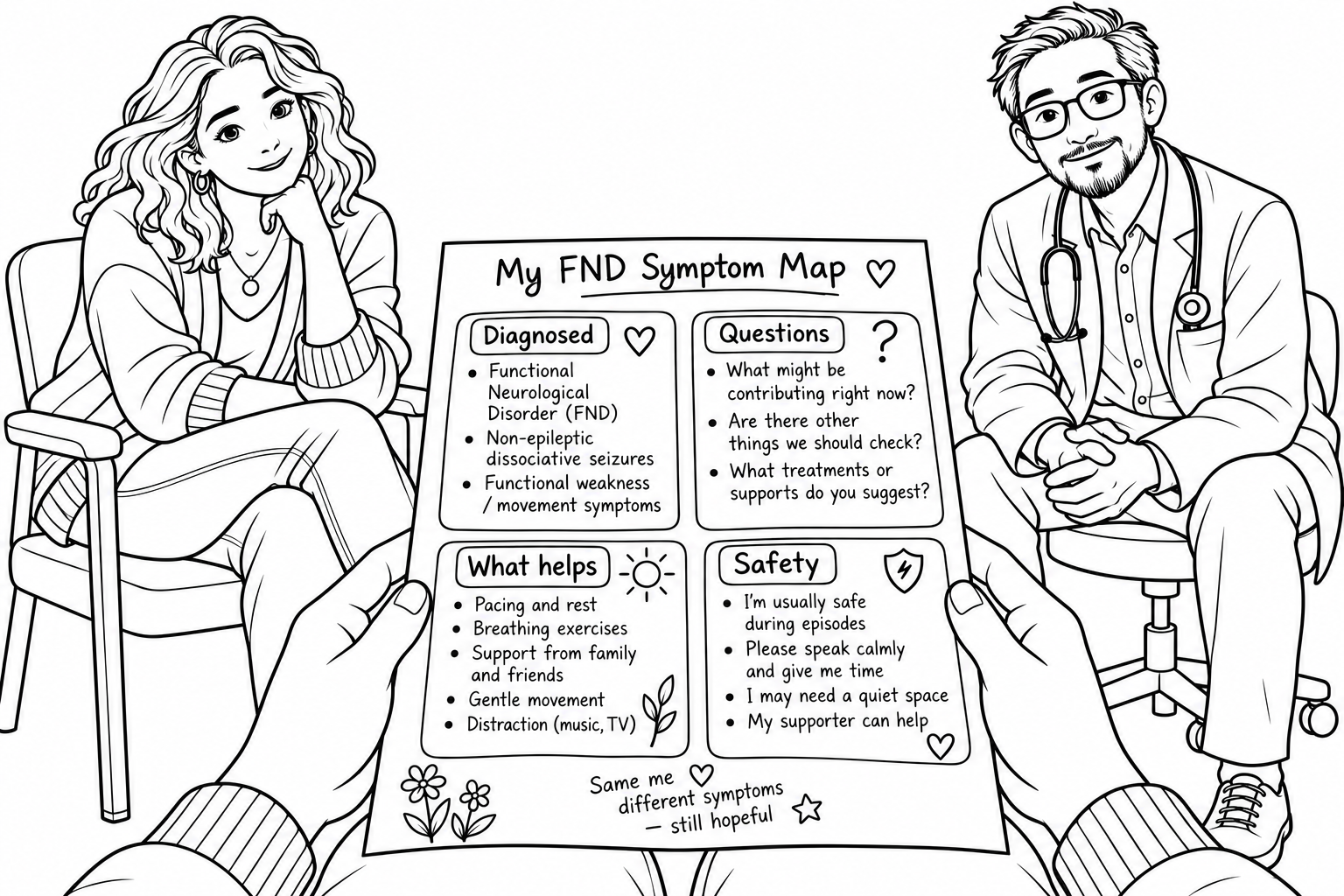 Lesson 11: Building and Using Your Personal Symptom Map PDF
 Lesson 10 colouring page PDF
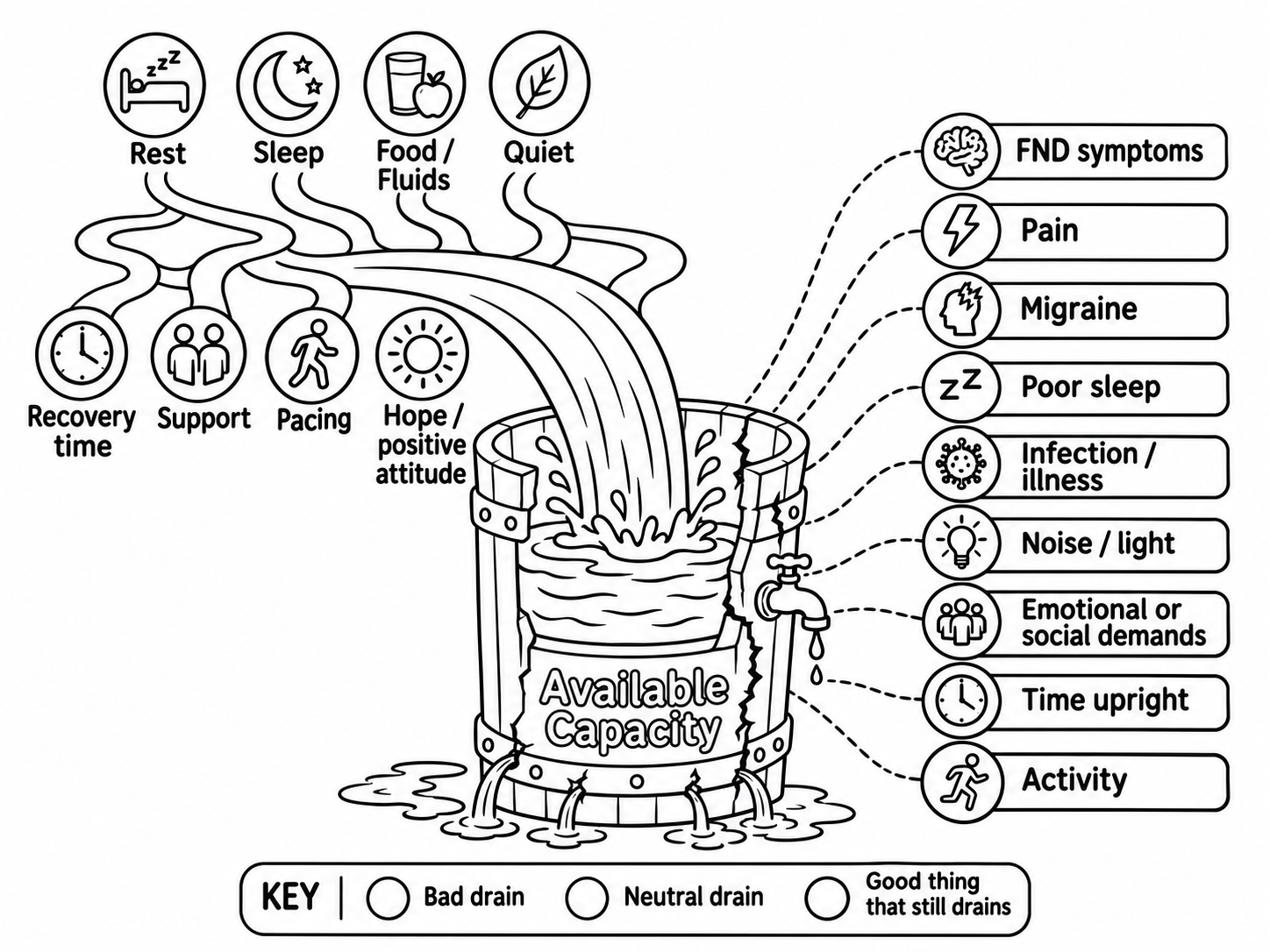 Lesson 4 colouring page PDF
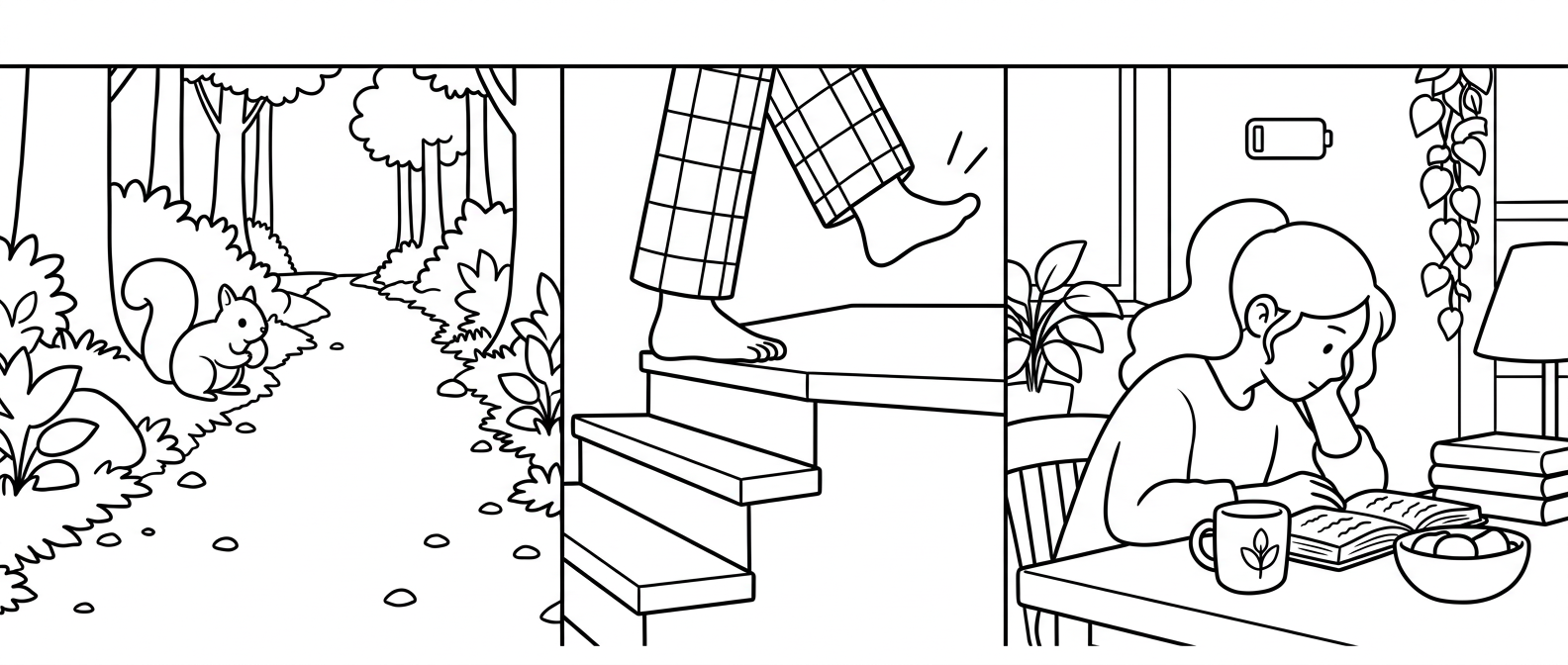 Lesson 1: Attention, prediction and internal cues PDF
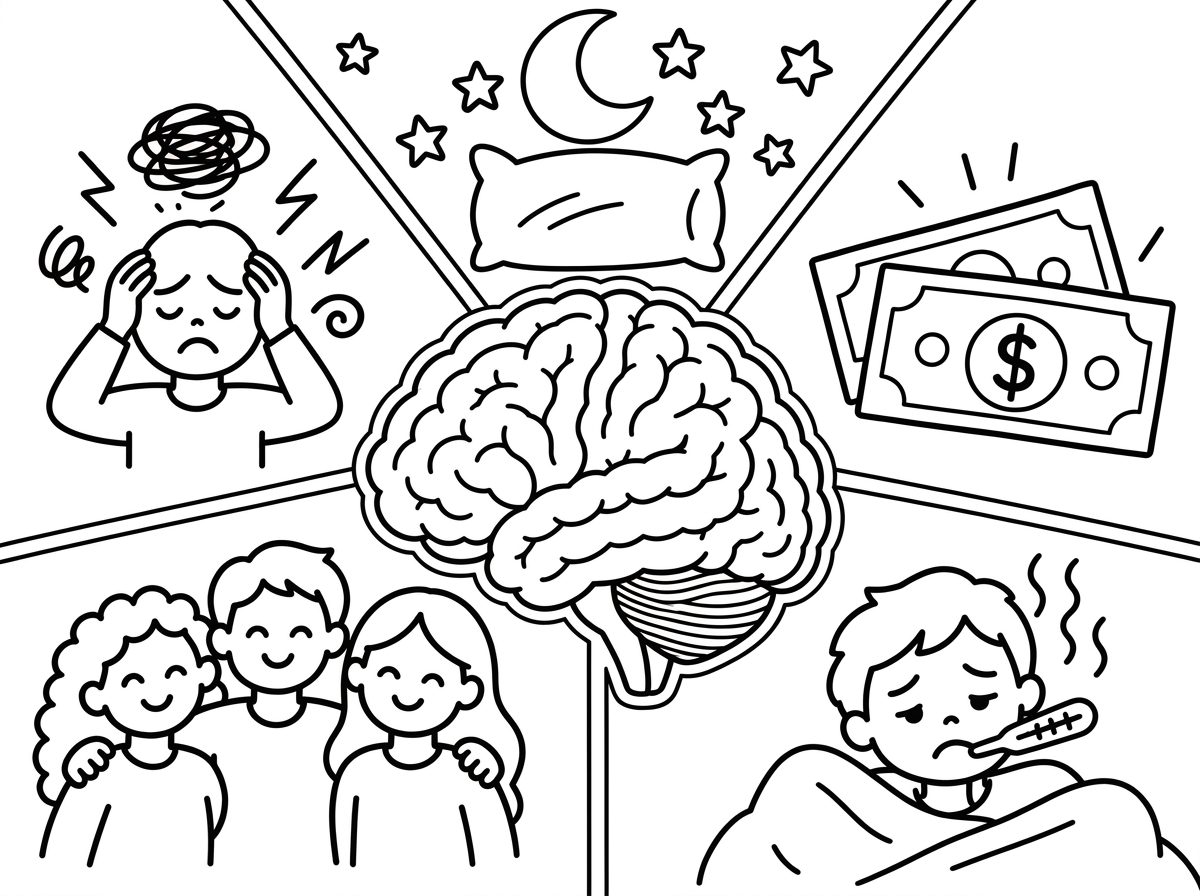 Lesson 2: Biopsychosocial factors PDF
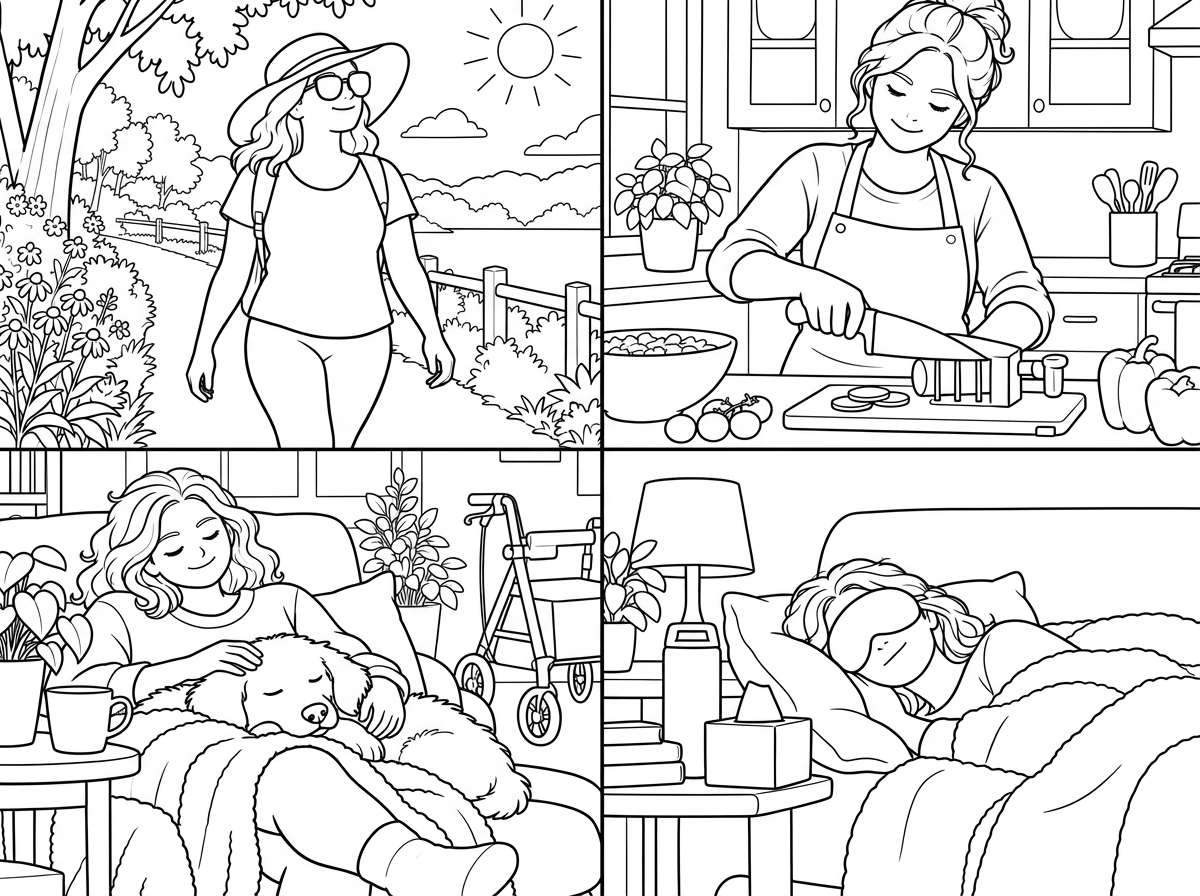 Lesson 3: Recovery and everyday life PDF
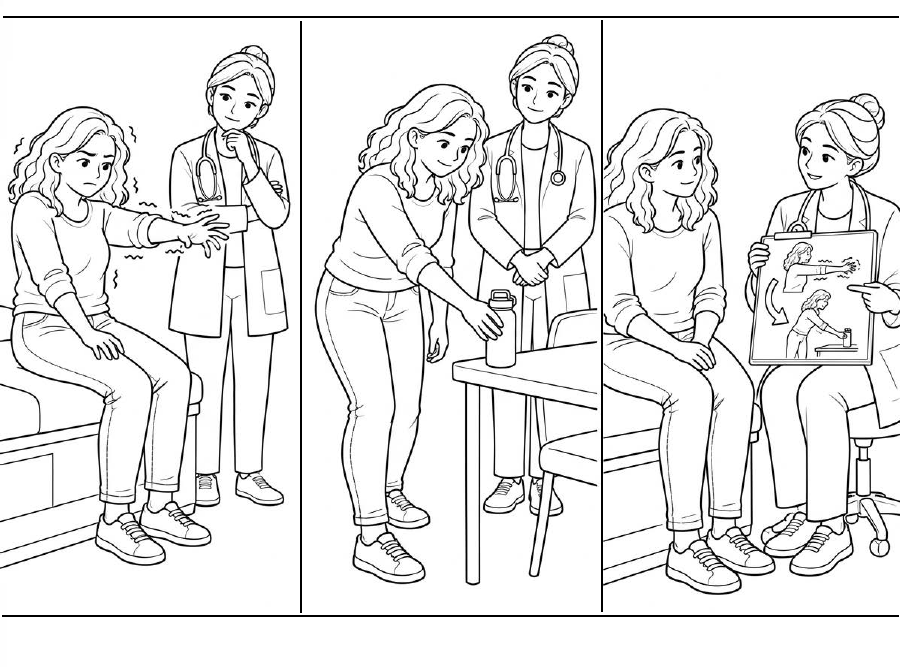 Lesson 5 (Module 2, Lesson 1): Positive signs PDF
 Lesson 6: Care for the whole person — Colouring page PDF
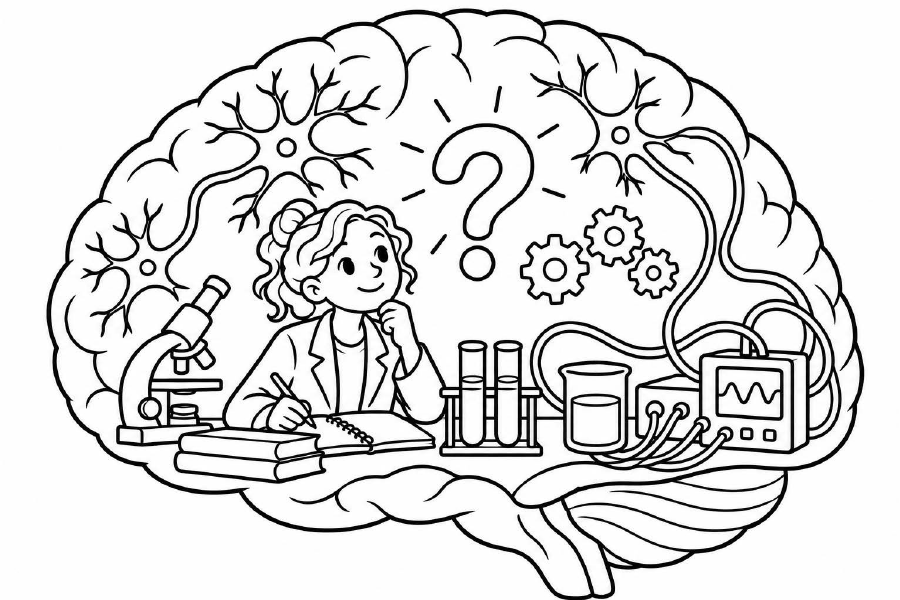 Lesson 7: Exploring questions about FND — Colouring page PDF
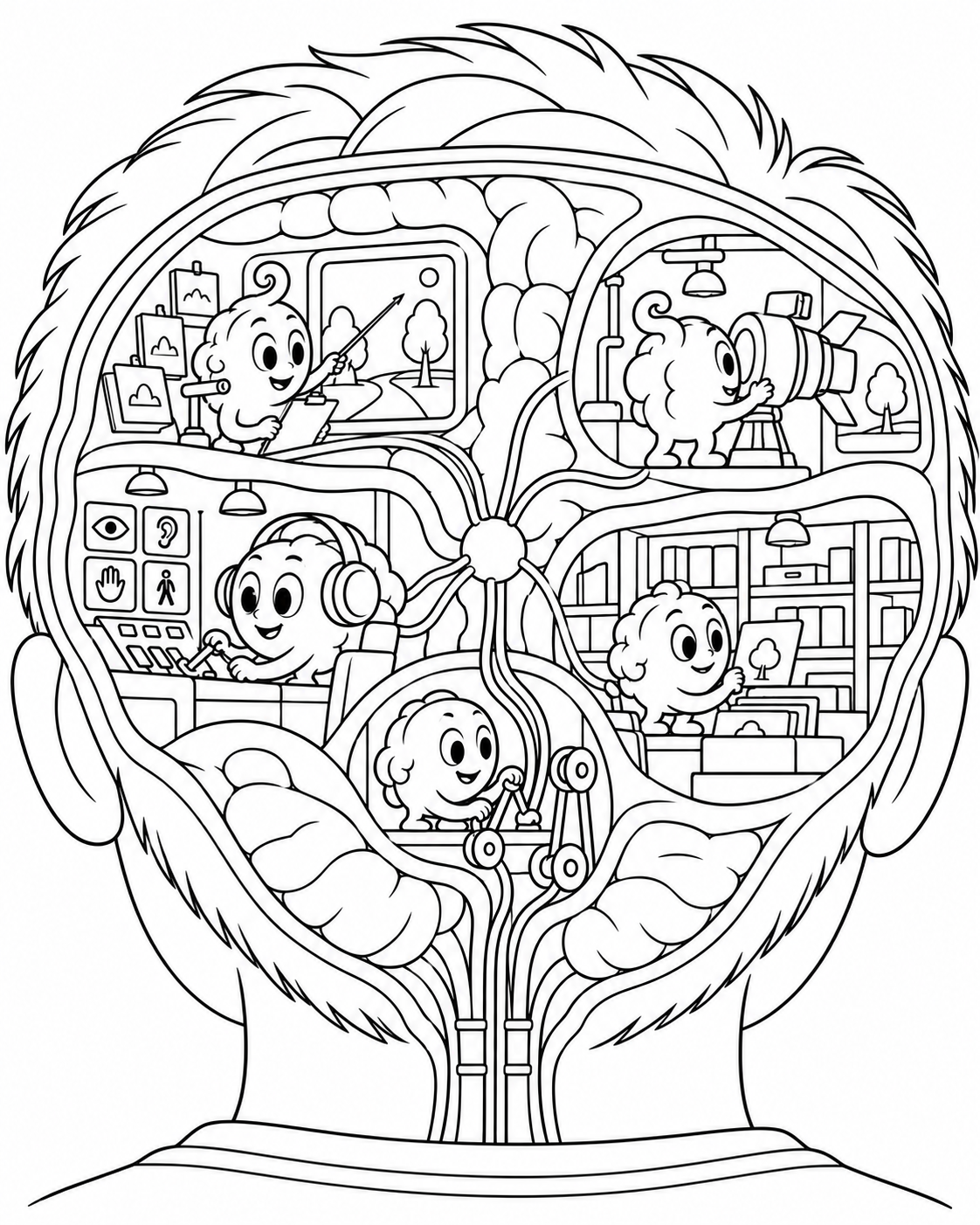 Lesson 8: Brain networks and their teamwork PDF
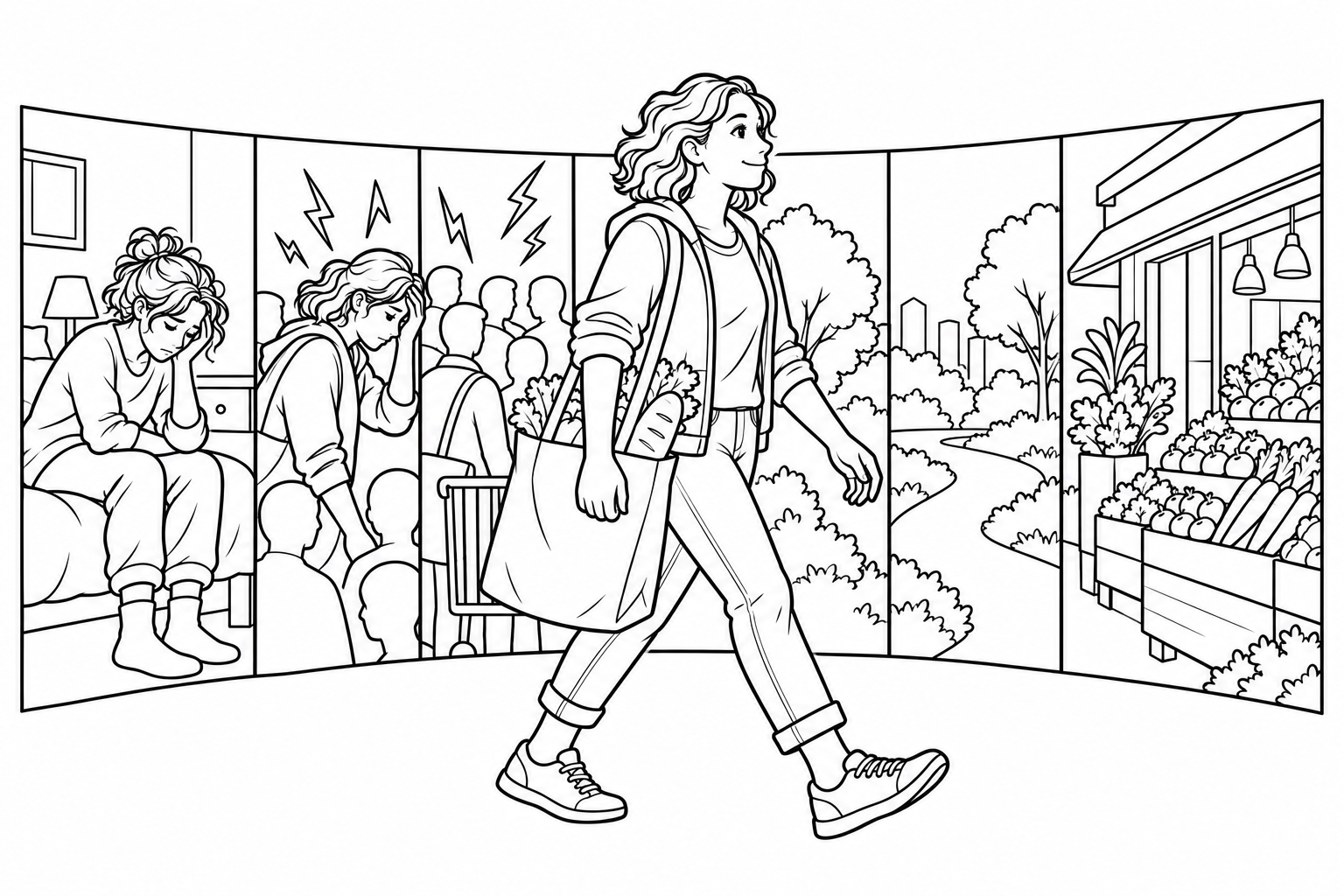 Lesson 9: The shopper's journey PDF
These illustrations accompany Lesson 1’s supporter examples, Lesson 2’s explanation of the biopsychosocial model, and Lesson 3’s explanation of recovery.
The positive-signs colouring page accompanies Module 2, Lesson 1.
The whole-person colouring page accompanies Lesson 6: Tests, Diagnostic Uncertainty, and Coexisting Conditions.
The research-themed colouring page accompanies Lesson 7: Causes, Risk Factors, Triggers, and Maintaining Factors.
The brain-network colouring page accompanies Lesson 8: Brain Networks, Prediction, Attention, and Agency.